
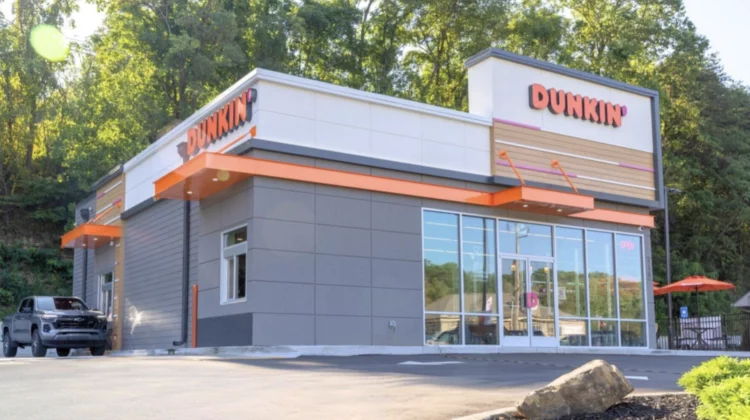
Dunkin’ Donuts is preparing for a major return to Canada, marking one of the most closely watched fast-food expansion stories in North America. After exiting the market in 2018, the U.S.-based coffee and donut giant is now planning a large-scale comeback with hundreds of new locations across the country.
This renewed push is not happening in a vacuum. Canada’s coffee and quick-service beverage market is already heavily shaped by deep consumer loyalty, especially toward Tim Hortons, a brand that has become closely tied to national identity. The competition sets the stage for a multi-year battle for customers, franchisees, and cultural relevance.
Backed by master franchise agreements and a carefully staged rollout strategy, Dunkin’s return is designed to be gradual but aggressive, targeting younger consumers and urban markets first before expanding nationwide.
The Canadian Coffee Landscape: A Market Built on Loyalty and Habit
Canada’s coffee culture is one of the most established in the world, with daily coffee consumption deeply embedded into routines across the country. For decades, Tim Hortons has dominated this space, shaping expectations around affordability, convenience, and familiarity.
With more than 4,000 locations across Canada, Tim Hortons holds a scale advantage that is difficult for any competitor to match. Its presence in small towns, highways, urban centers, and institutional spaces has made it a default choice for millions of Canadians.
Into this landscape steps Dunkin’, which aims to position itself not as a replacement but as an alternative offering a different kind of experience. While Tim Hortons leans heavily on tradition and national identity, Dunkin’ is attempting to brand itself as a more modern, beverage-driven coffee chain with an emphasis on customization and younger demographics.
The Exit and the Return: Why Dunkin Left Canada in 2018
Dunkin’ Donuts previously struggled in Canada, culminating in its complete exit from the market in 2018. The final closure followed legal and operational challenges, including a high-profile lawsuit involving Quebec franchisees who claimed the company did not adequately support brand promotion and competitiveness.
That legal dispute highlighted a deeper issue: Dunkin’ lacked consistent national identity and operational cohesion in Canada. Unlike in the United States, where it has a strong East Coast presence, its Canadian footprint was fragmented and unable to compete with entrenched domestic brands.
The exit marked the end of an era, but not necessarily a permanent withdrawal. Industry analysts at the time noted that Canada remained a highly attractive market due to population growth, urban expansion, and strong coffee consumption habits.
The 2027 Relaunch Plan: A Structured and Controlled Expansion
The new expansion strategy is being led through a master franchising agreement between Canadian operator Foodtastic and Inspire Brands, the U.S.-based parent company of Dunkin’.
Foodtastic, which also operates brands such as Second Cup, Milestones, and Pita Pit, is tasked with rebuilding Dunkin’s Canadian presence from the ground up.
The expansion is expected to begin in earnest around 2027, with a phased rollout starting in major urban centers such as Montreal and the Greater Toronto Area. The long-term goal is to establish hundreds of stores across the country.
Foodtastic leadership has indicated that early-stage demand from franchise partners is strong enough to support an aggressive opening schedule, with projections suggesting that new locations could open at a rapid pace once operations stabilize.
Consumer Reactions: Curiosity, Nostalgia, and Competition
Public reaction to Dunkin’s return has been mixed but engaged, reflecting Canada’s strong coffee culture loyalty. Interviews reported by CTV News highlight a blend of curiosity and brand loyalty among consumers.
Some Canadian coffee drinkers who have traveled to the United States already recognize Dunkin’ as a familiar option and associate it with convenience and sweet beverage offerings. Others remain firmly loyal to Tim Hortons, citing habit, taste preference, and emotional attachment.
There is also a noticeable segment of younger consumers who express willingness to experiment. This group tends to prioritize cold beverages, customization, and novelty, which aligns closely with Dunkin’s global marketing direction.
Rather than a unified national reaction, the response is fragmented, suggesting that Dunkin may find opportunities in niche segments rather than immediate mass adoption.
The Competitive Giant: Tim Hortons’ Structural Advantage
Tim Hortons remains the dominant force in Canadian quick-service coffee. Its advantage is not just in store count but in distribution density, brand familiarity, and long-standing integration into daily Canadian life.
The chain’s presence in workplaces, highways, small towns, and urban centers gives it unmatched accessibility. For many Canadians, a coffee run is synonymous with Tim Hortons, creating a behavioral habit that is difficult for competitors to disrupt.
Additionally, Tim Hortons has expanded its menu in recent years to include cold beverages, specialty drinks, and breakfast innovations, directly addressing trends that once gave competitors an edge.
Dunkin’s challenge is therefore not just about entering a market but about shifting ingrained consumer behavior patterns.
Targeting a New Generation: Dunkin’s Youth-Focused Strategy
One of the central pillars of the expansion strategy is demographic targeting. Foodtastic CEO Peter Mammas has emphasized that the brand will focus on younger consumers, particularly those between 13 and 33 years old.
The strategy involves positioning Dunkin as a modern beverage brand rather than a traditional donut shop. This includes a stronger emphasis on cold brews, iced beverages, refreshers, and customizable drinks that align with current global coffee trends.
The goal is to differentiate Dunkin from legacy perceptions and reintroduce it as a lifestyle-oriented brand. Store design, digital ordering, and product innovation are expected to play significant roles in shaping this new identity.
Rather than competing directly on tradition, Dunkin is attempting to compete on novelty, speed, and personalization.
Expert Perspective: Market Potential and Strategic Positioning
Retail analyst Bruce Winder believes Dunkin’s return is strategically better prepared than its previous Canadian operations. According to his assessment, the company is now approaching the market with more research, better localization, and a clearer understanding of consumer behavior.
The emphasis on regional adaptation, including menu adjustments and localized offerings, is expected to be critical in determining long-term success.
Winder also notes that the Canadian coffee market is large enough to support multiple major players, but success will depend on execution, consistency, and brand differentiation.
Tim Hortons’ Response: Reinforcing Community Identity
In response to competitive pressure, Tim Hortons has emphasized its community-based business model. Communications director Michael Oliveira has highlighted the brand’s deep ties to local communities and its Canadian ownership structure.
The company continues to position itself as a locally rooted brand that reinvests in communities where it operates. This messaging reinforces emotional loyalty, which is a key factor in consumer retention.
Rather than directly engaging in competitive rhetoric, Tim Hortons appears focused on reinforcing its established strengths: accessibility, familiarity, and national identity.
Expansion Roadmap: From Montreal and Toronto to Nationwide Growth
The initial phase of expansion is expected to concentrate on Montreal and the Greater Toronto Area, two of Canada’s most densely populated and diverse urban markets. These regions offer strong testing grounds for new menu items, branding strategies, and operational models.
Following successful early adoption, the plan is to expand into additional provinces and suburban markets. This phased approach reduces risk and allows for adjustments based on consumer feedback.
By 2028 and beyond, the goal is to establish a national footprint that can compete more directly with established chains.
Challenges Ahead: Real Estate, Competition, and Brand Perception
Despite strong planning, Dunkin faces significant challenges in re-entering Canada. The first is real estate competition, as prime retail locations in urban areas are already heavily occupied by established chains.
Second, brand perception remains a hurdle. While Dunkin is well-known in the United States, its Canadian identity is weaker, particularly after its previous exit.
Third, competition is not static. Tim Hortons and other competitors continue to innovate, narrowing the gaps that Dunkin previously relied on.
Finally, operational consistency will be critical. Rapid expansion can strain supply chains, staffing, and quality control, all of which contributed to earlier struggles in international markets.
Conclusion: A New Chapter in Canada’s Coffee Competition
The return of Dunkin’ Donuts to Canada represents more than just a business expansion. It signals a renewed contest for influence in one of the world’s most competitive coffee markets.
Against the backdrop of a dominant national player like Tim Hortons, Dunkin’s success will depend on its ability to modernize its brand, localize its offerings, and connect with a new generation of consumers.
The planned rollout beginning in 2027 will be closely watched by industry analysts, franchise operators, and consumers alike. Whether Dunkin becomes a strong second pillar in Canada’s coffee landscape or struggles to regain footing will depend on execution, timing, and cultural resonance.