
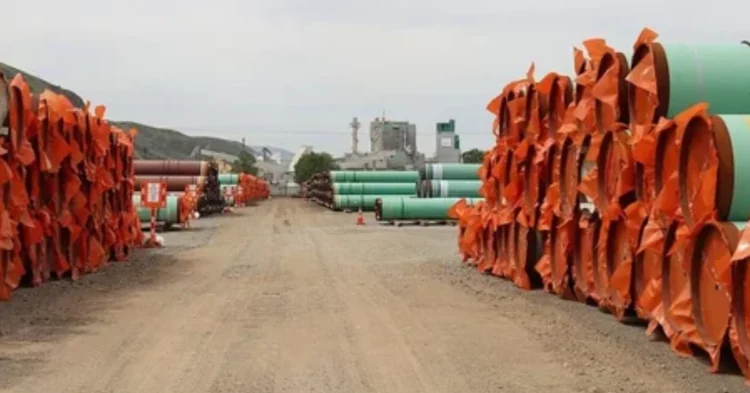
The Alberta government has begun exploring several possible routes for a major new oil export pipeline that could significantly reshape Canada’s energy transportation network. Newly revealed documents have provided the first detailed look at where the proposed project may be located and how it could connect Alberta’s oil production to export terminals on British Columbia’s coast.
The ambitious proposal aims to create a pipeline capable of transporting approximately one million barrels of oil per day to international markets. Provincial officials have suggested that construction could begin as early as 2027, although experts believe that timeline may be difficult to achieve given the complexity of the project.
The documents indicate that Alberta is examining multiple pipeline corridors through northern British Columbia while also considering a potential southern route that could terminate near the Vancouver region. The plans remain in the preliminary stages, with government officials conducting consultations with Indigenous communities, local governments, and industry stakeholders before selecting a preferred route.
The proposal comes at a time when Canada continues to debate how best to balance economic growth, energy security, environmental protection, and Indigenous participation in major infrastructure projects.
Three Northern British Columbia Routes Under Consideration
According to consultation materials shown to community leaders, Alberta is evaluating three primary routes through northern British Columbia.
These routes would provide access to several coastal locations where export terminals could potentially be developed. Each route presents unique opportunities and challenges related to geography, environmental concerns, regulatory approvals, and community support.
Route One: Fort McMurray to Observatory Inlet
The first proposed route would begin near Fort McMurray, the heart of Alberta’s oil sands industry.
From there, the pipeline would extend westward toward Fort St. John before continuing across northern British Columbia. The route would eventually reach Observatory Inlet, a remote coastal region situated north of Prince Rupert and far from major population centers.
Supporters may view this route as a way to connect directly to oil sands production areas. However, the remoteness of Observatory Inlet could present significant engineering and logistical challenges. Infrastructure development in such an isolated region would likely require substantial investment beyond the pipeline itself.
Route Two: Fort Saskatchewan to Nasoga Gulf
A second option would originate near Fort Saskatchewan, located northeast of Edmonton.
After crossing the Rocky Mountains, the pipeline would travel toward the northern coast of British Columbia before terminating near Nasoga Gulf. This route would require traversing difficult terrain while crossing environmentally sensitive regions.
The route’s northern location may offer strategic advantages from a political standpoint if local communities prove supportive. However, it would still face considerable regulatory scrutiny due to the ecological importance of the surrounding area.
Route Three: Fort Saskatchewan to Kitimat and Prince Rupert
The third route would also begin near Fort Saskatchewan but would follow a different path through British Columbia.
After heading west, the pipeline would eventually split, creating connections to both Kitimat and Prince Rupert. Portions of this pathway resemble the route once proposed for the Northern Gateway project, which was ultimately cancelled after years of political and legal opposition.
Kitimat and Prince Rupert are often viewed as attractive export locations because they already possess industrial infrastructure and access to global shipping lanes. Nevertheless, any new proposal involving these coastal communities would likely reignite debates surrounding environmental protection and tanker traffic.
Coastal Port Options Could Play a Critical Role
The consultation documents identify several potential export terminals along British Columbia’s northern coast.
Among the locations under consideration are Observatory Inlet, Nasoga Gulf, Prince Rupert, Stewart, and Grassy Point.
Each port location presents different advantages in terms of shipping access, development costs, and proximity to international markets. However, all of the identified sites share one major challenge.
Tanker Moratorium Creates Uncertainty
Every northern port under consideration falls within an area currently covered by Canada’s federal oil tanker moratorium.
The moratorium restricts large oil tankers from operating along parts of British Columbia’s northern coastline. As a result, any proposal involving these ports would likely require significant political negotiations and regulatory reviews.
The existence of the tanker ban introduces another layer of complexity for project planners. Even if a pipeline route receives approval, questions would remain regarding whether oil exports could proceed through the selected coastal terminal.
Why Alberta May Be Choosing More Politically Viable Routes
Energy analysts reviewing the proposed routes believe Alberta may be prioritizing political feasibility over the shortest or least expensive path.
Some experts argue that less costly alternatives through northern British Columbia could have been considered. However, the routes currently being explored appear to pass through regions where communities may be more receptive to pipeline development.
This strategy could help reduce opposition and streamline consultation processes.
While choosing politically favorable routes may increase construction costs, proponents may believe the approach will save time and reduce legal challenges later in the project lifecycle.
For governments and investors, avoiding prolonged court battles and regulatory delays can often be worth additional upfront expenses.
Route Selection Remains Uncertain
Despite the detailed maps shown during consultations, Alberta has not finalized any specific route.
Officials involved in the process indicate that revisions have already been made and further adjustments are expected.
More recent discussions with stakeholders have focused on broader pipeline corridors rather than exact routes. This approach allows planners to gather feedback before committing to a final alignment.
Government representatives suggest that a general corridor may ultimately be included in Alberta’s submission to the federal Major Projects Office. A more detailed route could then be selected after additional consultation and technical evaluation.
This flexible approach reflects the early stage of project development and acknowledges the importance of incorporating stakeholder input before making major decisions.
Engineering Challenges Across Northern British Columbia
Constructing a pipeline across northern British Columbia presents substantial engineering difficulties.
The region contains rugged mountains, remote wilderness areas, protected lands, and numerous waterways. These natural features can significantly increase project costs and complexity.
River Crossings and Environmental Protection
One of the most significant concerns involves major river systems such as the Nass River and the Skeena River.
These waterways support important salmon populations and play critical roles in local ecosystems and Indigenous cultures.
Pipeline construction near these rivers would require extensive environmental assessments and mitigation measures. Regulators would likely demand detailed plans demonstrating how water quality, fish habitat, and ecological integrity would be protected.
Environmental organizations and Indigenous communities are expected to closely scrutinize any proposal involving these sensitive areas.
Difficult Terrain Increases Costs
Mountainous landscapes create additional obstacles for pipeline construction.
Engineers would need to design routes capable of handling steep slopes, unstable terrain, avalanche zones, and challenging weather conditions.
Remote locations also complicate transportation of equipment and materials. Building supporting infrastructure such as access roads, camps, and maintenance facilities could significantly increase project expenditures.
These factors contribute to uncertainty regarding the project’s overall cost and timeline.
Indigenous Consultations Become a Central Focus
The Alberta government has emphasized Indigenous engagement as a key component of the project planning process.
Led by Indigenous Relations Minister Rajan Sawhney, consultation efforts have reportedly involved discussions with more than 40 Indigenous communities across Alberta and British Columbia.
Because no final route has been selected, consultations have covered a broad geographic area.
Exploring Indigenous Ownership Opportunities
Government representatives have introduced the possibility of Indigenous ownership participation in the project.
During meetings with community leaders, officials have discussed potential investment opportunities and financial support mechanisms available through the Alberta Indigenous Opportunities Corporation.
This approach reflects a growing trend in Canada toward Indigenous equity participation in major infrastructure developments.
Supporters argue that ownership stakes can provide long-term economic benefits while creating stronger partnerships between project developers and Indigenous communities.
Lessons From Previous Pipeline Projects
Canada’s history demonstrates the importance of meaningful Indigenous consultation.
Several major pipeline projects have faced delays or legal setbacks due to concerns regarding consultation processes.
One notable example occurred in 2018 when construction on the Trans Mountain Expansion Project was temporarily halted following a court ruling that found consultation efforts had been inadequate.
As a result, governments and industry leaders recognize that successful engagement requires more than simply informing communities about a project. Indigenous groups increasingly expect active participation in decision-making and project design.
The Challenge of Consulting Before a Route Exists
One unusual aspect of Alberta’s current approach is that consultations are occurring before a final route has been selected.
This creates a dilemma for both government officials and community leaders.
Many local representatives want detailed information before offering opinions on the project. At the same time, government planners seek feedback before determining exactly where the pipeline should go.
Industry experts describe this situation as a classic “chicken-and-egg” problem.
Ideally, project proponents establish a general corridor and then work collaboratively with communities to refine the route based on local knowledge and concerns.
The success of Alberta’s consultation strategy may depend on its ability to balance these competing expectations.
Can Construction Really Begin by 2027?
The Alberta government has expressed hope that construction could begin as early as 2027.
However, many industry observers consider this timeline highly optimistic.
Regulatory Approvals Take Time
Large pipeline projects typically require years of environmental studies, engineering work, consultations, and regulatory reviews.
Federal and provincial agencies would need to assess potential impacts on wildlife, waterways, Indigenous rights, and local communities.
Public hearings and legal challenges could further extend timelines.
Corporate Structure Still Needs Development
Beyond regulatory hurdles, Alberta must also determine who will build and operate the pipeline.
A private-sector partner would likely be required to lead construction and manage operations.
Questions regarding financing, ownership structure, investment commitments, and commercial agreements remain unresolved.
Until these issues are addressed, the project’s timeline will remain uncertain.
Political Support and Opposition Continue to Emerge
The proposed pipeline has quickly become a politically significant issue.
Alberta Premier Danielle Smith is working with Prime Minister Mark Carney to advance the project as part of broader discussions surrounding Canada’s economic development and energy future.
The provincial government hopes the proposal will qualify as a nation-building project through the federal Major Projects Office, potentially accelerating approvals.
British Columbia Remains Skeptical
Despite support from Alberta, opposition remains strong in British Columbia.
Premier David Eby has publicly criticized the idea of prioritizing new oil pipeline projects through the province.
His government continues to express concerns regarding environmental risks, tanker traffic, and the broader implications of expanding fossil fuel infrastructure.
This provincial divide highlights longstanding tensions between Alberta’s energy sector priorities and British Columbia’s environmental and coastal protection goals.
Local Governments Seek More Answers
Recent consultation meetings with local governments reveal that many stakeholders remain unconvinced.
Officials from northeastern British Columbia have requested additional information regarding ownership structures, economic benefits, environmental protections, and Indigenous participation.
Questions have also been raised about how Alberta intends to secure cooperation from the British Columbia government.
Representatives leading the consultations have acknowledged that many details are still being developed.
In some cases, officials have admitted they cannot yet say whether the final route will travel through northern or southern British Columbia.
This uncertainty reflects the preliminary nature of the proposal but also illustrates why some communities remain cautious about offering support.
What Happens Next?
The coming months could prove decisive for Alberta’s pipeline ambitions.
The government plans to submit its proposal to the federal Major Projects Office, where it will be evaluated alongside other major infrastructure initiatives.
If selected, the project could receive accelerated consideration as a nationally significant development.
However, substantial challenges remain.
Route selection, Indigenous partnerships, environmental assessments, regulatory approvals, financing arrangements, and political negotiations must all be addressed before construction can begin.
The proposal represents one of the most significant energy infrastructure concepts currently under discussion in Canada. Whether it ultimately becomes reality will depend on the government’s ability to navigate complex environmental, economic, legal, and political considerations while building support among Indigenous communities, local governments, industry stakeholders, and the broader public.