
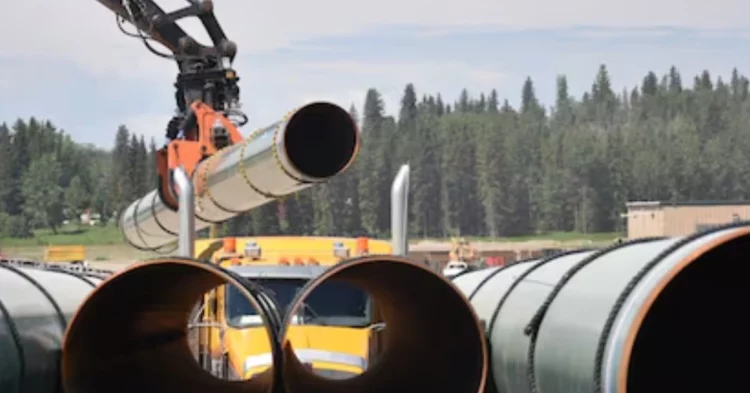
Alberta, the heart of Canada’s oil industry, is taking significant steps to expand its presence in Asian energy markets. In a move that could reshape global crude oil trade flows, the Government of Alberta is actively negotiating with Japan to increase exports of Canadian crude oil and help the Asian nation reduce its heavy dependence on Middle Eastern energy supplies.
The initiative comes at a time when energy security has become a top priority for many countries. Geopolitical tensions, supply chain disruptions, and uncertainty in global oil markets have exposed the vulnerabilities of relying too heavily on a single region for energy imports. Japan, which currently sources approximately 95 percent of its crude oil from the Middle East, is seeking greater diversification of supply, while Canada is looking for new export markets beyond the United States.
Leading these discussions is Alberta Energy Minister Brian Jean, who recently visited Japan to meet with government officials, refiners, energy traders, and financial institutions. The talks focused on developing long-term partnerships that could increase Canadian oil exports to Japan while also addressing the technical challenges associated with processing Alberta’s heavy crude.
The negotiations represent more than just a trade opportunity. They could strengthen economic ties between Canada and Japan, support future infrastructure investments, and contribute to a more diversified and resilient global energy market.
Why Japan Is Looking Beyond the Middle East for Oil Supplies
Growing Concerns About Energy Security
Japan has long depended on Middle Eastern countries for the majority of its oil imports. While the region has remained a crucial energy supplier for decades, recent geopolitical developments have highlighted the risks associated with such concentrated sourcing.
Conflicts in the Middle East and disruptions to critical shipping routes have raised concerns among Japanese policymakers and energy companies. The Strait of Hormuz, one of the world’s most important oil transit chokepoints, remains particularly vulnerable to regional tensions. Any disruption to oil shipments through this corridor can have significant consequences for countries like Japan that rely heavily on imported energy.
As a result, Japan has been actively seeking ways to diversify its energy supply chain and reduce exposure to geopolitical risks. Expanding imports from politically stable countries such as Canada aligns with Japan’s broader strategy to strengthen long-term energy security.
Diversification as a National Priority
Diversifying crude oil imports is not simply an economic decision for Japan. It is a strategic national objective.
The country has spent years developing relationships with alternative suppliers and investing in energy projects around the world. Canada’s reputation as a reliable trading partner and stable democracy makes it an attractive option for Japanese buyers seeking long-term supply agreements.
By securing additional crude from Canada, Japan could reduce its dependence on any single region while enhancing the resilience of its energy infrastructure.
Alberta’s Proposal to Support Japanese Refiners
Funding Refinery Upgrades
One of the key challenges in increasing Canadian oil exports to Japan involves refining capacity.
Most of Alberta’s oil sands production consists of heavy crude oil, which contains higher levels of sulfur and requires specialized equipment for processing. Many Japanese refineries were originally designed to handle lighter grades of crude imported from the Middle East and other regions.
To address this issue, Alberta has proposed helping finance the construction of a coker unit in Japan. A coker unit is a refinery component that enables facilities to process heavier crude oils more efficiently by converting residual materials into valuable petroleum products.
This proposal demonstrates Alberta’s willingness to invest directly in solutions that facilitate long-term export growth. Rather than simply seeking buyers for its oil, the province is working collaboratively with Japanese stakeholders to ensure their facilities can accommodate Canadian crude.
Developing Customized Oil Blends
In addition to refinery upgrades, Alberta is exploring another innovative solution.
Officials are evaluating whether Alberta’s heavy crude could be blended with lighter synthetic crude oil to create a product better suited to Japanese refining systems. Such a blend could offer greater compatibility with existing refinery infrastructure while preserving the economic benefits of importing Canadian oil.
This customer-focused approach reflects Alberta’s broader strategy of adapting its products to meet market demands. By offering customized solutions, the province hopes to overcome technical barriers that have historically limited Canadian oil exports to Japan.
Brian Jean’s Mission to Strengthen Canada-Japan Energy Relations
High-Level Meetings Across Japan
During his recent visit to Japan, Alberta Energy Minister Brian Jean held a series of meetings with influential organizations and government agencies involved in the country’s energy sector.
These discussions included representatives from:
Japan Organization for Metals and Energy Security (JOGMEC)
JOGMEC plays a critical role in securing stable energy and resource supplies for Japan. The organization supports overseas energy projects and helps strengthen the country’s resource security strategy.
Japan Bank for International Cooperation (JBIC)
JBIC is a major government-backed financial institution that supports international economic cooperation and infrastructure investment. Its involvement could prove essential in financing future energy projects between Canada and Japan.
Ministry of Economy, Trade and Industry (METI)
METI oversees Japan’s industrial and energy policies and serves as a key decision-maker in matters related to energy security and resource procurement.
Industry Stakeholders
Jean also met with Japanese refiners, steel manufacturers, commodity traders, and energy companies to explore practical opportunities for cooperation and long-term supply agreements.
According to Alberta officials, discussions remain active and productive, with both sides exploring multiple avenues for collaboration.
Canada’s Push to Diversify Oil Exports
Reducing Dependence on the United States
Canada currently exports the vast majority of its crude oil to the United States.
Approximately 90 percent of Canadian crude exports travel south through an extensive pipeline network that has been built over decades. While the United States remains Canada’s largest energy customer, recent political developments have highlighted the importance of market diversification.
Trade uncertainty and evolving policy positions have encouraged Canadian leaders to pursue new export opportunities in Asia and other international markets. Expanding relationships with countries such as Japan forms an important part of this strategy.
Building New Global Markets
Canada possesses some of the world’s largest oil reserves, particularly within Alberta’s oil sands region. As production continues to increase, finding new markets has become increasingly important.
Asian economies represent a significant growth opportunity due to their large populations, industrial expansion, and ongoing energy needs. Establishing stronger trade relationships with countries such as Japan can help Canada reduce reliance on a single export destination while enhancing long-term economic stability.
The Impact of the Trans Mountain Pipeline Expansion
A Game-Changer for Canadian Energy Exports
The completion of the Trans Mountain pipeline expansion in 2024 marked a major milestone for Canada’s energy sector.
The project significantly increased the country’s ability to transport crude oil from Alberta to the Pacific Coast, creating a direct pathway for exports to Asian markets.
Prior to the expansion, limited pipeline capacity constrained Canada’s ability to reach overseas customers. The new infrastructure has transformed the country’s export capabilities and opened the door to stronger commercial relationships across the Asia-Pacific region.
Growing Interest From Asian Buyers
Since becoming operational, the expanded pipeline has attracted growing interest from international buyers.
China has emerged as the largest purchaser of Canadian crude in Asia, demonstrating the region’s appetite for diversified energy supplies. The pipeline is now operating at full capacity, underscoring the strong demand for Canadian oil in overseas markets.
Although Japan has occasionally imported cargoes transported through the Trans Mountain system, volumes have remained relatively limited due to refinery compatibility challenges.
The current discussions aim to change that reality and establish a more consistent flow of Canadian crude into the Japanese market.
Could Japan Help Support a New Canadian Export Pipeline?
Alberta’s Vision for Additional Infrastructure
The potential growth of exports to Japan could strengthen the business case for another major pipeline project connecting Alberta to Canada’s west coast.
Provincial leaders have been advocating for a new export pipeline capable of transporting up to one million barrels of oil per day. Such infrastructure would further expand Canada’s access to global markets and reduce transportation bottlenecks.
The Alberta government has indicated that it plans to unveil a formal proposal for the project by July 1.
Challenges Facing New Pipeline Development
Despite growing interest in expanding export capacity, significant challenges remain.
No private-sector company has yet committed to constructing the proposed pipeline. Large-scale energy infrastructure projects require substantial capital investment, regulatory approvals, environmental assessments, and long-term customer commitments.
Securing Japanese demand for Canadian crude could play a key role in demonstrating the commercial viability of the project and attracting investor support.
Canada’s Rising Oil Production Creates New Opportunities
Record Output Levels
Canada’s oil production continues to grow steadily.
Industry forecasts suggest that national output in 2026 will surpass the previous record of 5.3 million barrels per day achieved in 2025. Rising production is being driven by continued investment in oil sands operations, technological improvements, and stronger export infrastructure.
As production expands, the need for additional international markets becomes increasingly important.
Meeting Global Demand
Global energy demand remains robust despite ongoing efforts to transition toward lower-carbon energy sources.
Many economies continue to rely heavily on oil for transportation, manufacturing, aviation, and petrochemical production. Canada’s ability to provide stable and reliable supplies positions it as an attractive partner for countries seeking secure energy sources.
The development of stronger trade relationships with Japan could help ensure that growing Canadian production finds a dependable international customer base.
What This Partnership Could Mean for the Global Energy Market
Strengthening Energy Security
A successful Canada-Japan energy partnership could improve energy security for both nations.
Japan would gain access to a reliable alternative source of crude oil, reducing vulnerability to disruptions in the Middle East. Canada would benefit from a diversified export portfolio and greater access to one of Asia’s largest economies.
Encouraging Infrastructure Investment
The collaboration could also stimulate investment in refining facilities, transportation networks, and export infrastructure across both countries.
Such investments would create economic opportunities while supporting the long-term development of international energy trade.
Reshaping Global Oil Trade Flows
If Japanese imports of Canadian crude increase substantially, global oil trade patterns could gradually shift.
New supply routes linking North America and Asia may emerge as countries seek more diversified energy partnerships. This evolution would reflect broader changes occurring throughout the global energy landscape as nations balance economic growth, energy security, and geopolitical considerations.
Conclusion
Alberta’s efforts to expand oil exports to Japan represent a strategic initiative with far-reaching implications for both countries. By addressing refinery compatibility challenges, supporting infrastructure development, and fostering long-term partnerships, Alberta is positioning itself as a key supplier in Japan’s energy diversification strategy.
At the same time, Canada is advancing its own goal of reducing dependence on the U.S. market and strengthening its presence in Asia. The Trans Mountain pipeline expansion has already created new opportunities for overseas exports, and future infrastructure projects could further enhance Canada’s role in global energy markets.