
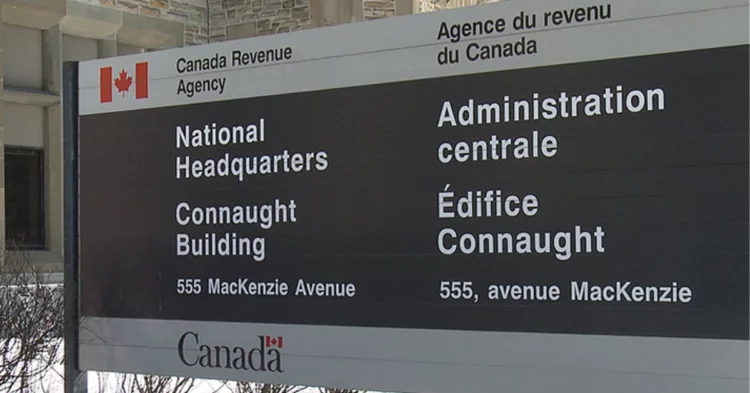
The decision by the Canada Revenue Agency to postpone the implementation of its revised GST/HST policy on mutual fund trailing commissions marks one of the most significant administrative delays in recent Canadian tax policy for the financial advisory sector. The agency has now extended the deadline to January 1, 2028, giving wealth management firms, fund dealers, and independent advisers substantially more time to adapt their systems, processes, and compliance frameworks.
Originally scheduled to take effect on July 1, the policy change would have required dealers and advisers to begin charging and remitting GST/HST on mutual fund trailer fees starting mid-2026. The revised timeline reflects both the complexity of the industry’s infrastructure and the operational burden associated with updating back-office systems across thousands of financial intermediaries.
This extended transition period signals both regulatory flexibility and growing recognition of the technical challenges embedded in Canada’s mutual fund distribution ecosystem.
Understanding the GST/HST Change on Mutual Fund Trailer Fees
What Are Mutual Fund Trailing Commissions?
Mutual fund trailing commissions, often referred to as trailer fees, are ongoing payments made by mutual fund companies to dealers and advisers. These fees are typically embedded within the management expense ratio of mutual funds and compensate advisers for ongoing client service, portfolio monitoring, and account maintenance.
Historically, these fees were not subject to GST/HST under the CRA’s long-standing administrative position. However, after a policy reassessment earlier this year, the CRA determined that trailing commissions should be treated as taxable supplies of services, bringing them under the GST/HST framework.
This shift fundamentally changes how compensation flows are treated in Canada’s retail investment industry.
CRA’s Revised Position and the New Implementation Timeline
Extension to January 1, 2028
The CRA confirmed that dealers and independent advisers now have until January 1, 2028, to implement the new tax requirements. This represents an 18-month extension from the previously announced deadline of July 1.
The agency explained that the delay is intended to provide sufficient time for the industry to complete necessary system upgrades and procedural changes. These updates include billing infrastructure modifications, tax calculation systems, adviser compensation tracking, and compliance reporting tools.
Encouragement for Early Compliance
Despite the delay, the CRA has made it clear that firms are encouraged to begin applying GST/HST on trailing commissions as soon as operationally feasible. This suggests a phased-in expectation, where early adopters may begin compliance ahead of the mandatory deadline.
The CRA’s updated guidance also emphasizes that the transitional period is not a regulatory pause, but rather a preparatory window designed to reduce disruption at full implementation.
Why the CRA Changed Its Position on Trailer Fees
Evolving Industry Structure
According to the CRA, significant regulatory and operational changes in Canada’s mutual fund industry over recent years prompted a reassessment of how GST/HST should apply to trailing commissions. These changes include:
Increased complexity of dealer-adviser relationships
Growth in fee-based advisory models
Advancements in automated compensation systems
Greater standardization through platforms such as FundServ Inc.
The agency concluded that trailing commissions represent taxable services provided by dealers and advisers, aligning them with other financial advisory fees that are already subject to GST/HST.
Alignment With Broader Tax Treatment
The change also reflects an effort to standardize tax treatment across financial services. While some investment-related services remain exempt or zero-rated under specific rules, advisory and distribution services are increasingly being categorized as taxable supplies.
This shift brings trailing commissions in line with other forms of service-based compensation in Canada’s financial sector.
Industry Response and Requests for Delay
Pressure From Financial Industry Groups
Wealth management associations and dealer networks had been actively lobbying the Department of Finance and the CRA to delay implementation. Their primary concern centered on the short timeline initially provided for compliance.
Industry stakeholders argued that firms would not be able to fully redesign compensation systems, tax reporting mechanisms, and fund accounting processes by the original July deadline.
The operational burden includes:
Updating legacy advisor compensation systems
Integrating tax calculation tools across platforms
Coordinating with fund companies and intermediaries
Training advisers on GST/HST obligations
Ensuring accurate remittance reporting structures
CRA’s Mid-May Indication of Extension
In mid-May, the CRA reportedly informed industry groups that a deferral was under consideration. This early communication was later confirmed in an advisory issued by EY Canada, although the official new implementation date was not publicly released until Tuesday.
The delay was widely anticipated, but the formal confirmation provided regulatory certainty for long-term planning.
Operational Implications for Wealth Management Firms
System Overhaul Requirements
The extension to 2028 does not eliminate the need for significant infrastructure upgrades. Instead, it provides a longer runway for implementation.
Wealth management firms must ensure that their systems can:
Track trailer fees at the individual adviser level
Separate taxable and non-taxable components of compensation
Calculate GST/HST in real time
Generate compliant tax invoices
Support audit-ready reporting structures
These requirements involve coordination between fund companies, dealer platforms, and third-party service providers.
Role of FundServ and Industry Platforms
Intermediaries such as FundServ Inc. play a central role in enabling the industry to process mutual fund transactions and compensation flows. System modifications within these platforms are critical for ensuring accurate tracking of GST/HST obligations across thousands of products and adviser relationships.
Back-office modernization is therefore not limited to individual firms but extends across the entire financial infrastructure ecosystem.
Input Tax Credits and Compliance Risks
CRA Warning on Input Tax Credits
One of the most significant elements of the updated CRA guidance relates to input tax credits (ITCs). The CRA has stated that if a dealer claims ITCs for GST/HST paid in relation to services tied to trailing commissions, it may trigger an obligation to begin remitting GST/HST earlier than January 1, 2028.
This introduces a compliance risk for firms already registered under GST/HST systems.
Increased Scrutiny for Registered Dealers
According to tax experts, including Tariq Nasir, partner in indirect tax at EY Canada, firms must be extremely cautious in how they classify and claim ITCs. Improper classification or premature claims could unintentionally activate full GST/HST remittance obligations ahead of the transition deadline.
This creates a dual challenge:
Ensuring accurate tax treatment of expenses
Avoiding unintended early compliance triggers
As a result, many firms are expected to adopt conservative accounting approaches during the transition period.
Adviser-Level Implications and Administrative Adjustments
Requirement for GST/HST Registration
Independent advisers and dealer representatives will likely need to ensure they have valid GST/HST registration numbers. Many advisers already registered for other business activities, such as insurance or consulting services, may need to assess whether separate registration or reporting structures are required for investment-related income.
Firms such as Portfolio Strategies Corp. have already begun requesting GST/HST numbers from advisers to prepare for system integration.
Adviser Responsibilities in the New Framework
Jason Bobee, president of Portfolio Strategies Corp. in Toronto, noted that firms are actively working with fund companies and intermediary systems such as FundServ Inc. to prepare for implementation. Advisers will eventually be responsible for remitting their portion of GST/HST based on tax flow data provided by their dealer firms.
This introduces new administrative responsibilities at the adviser level, including:
Tracking taxable income components
Ensuring correct GST/HST remittance
Working with tax professionals for compliance accuracy
Maintaining records for audit purposes
The shift effectively formalizes a more structured tax compliance role for advisers who previously operated without direct GST/HST obligations on trailer compensation.
Transitional Strategy and Industry Preparation
System Testing and Phased Implementation
With the extended timeline, many firms are expected to adopt phased implementation strategies. This includes:
Pilot testing GST/HST calculation systems
Running parallel reporting systems
Gradual onboarding of advisers into compliance frameworks
Coordinating with fund companies for data validation
These steps are necessary to ensure a smooth transition and minimize disruption when the rule becomes mandatory in 2028.
Training and Education Initiatives
Industry groups and compliance departments are also expected to expand training programs for advisers and operational staff. These programs will focus on:
GST/HST fundamentals for financial services
Reporting obligations and timelines
System usage and compensation tracking
Audit preparedness and documentation standards
Given the scale of the industry, training will likely be one of the most time-intensive components of the transition.
Broader Implications for Canada’s Financial Advisory Industry
Shift Toward Greater Tax Transparency
The CRA’s decision reflects a broader trend toward increased tax transparency in financial services. By bringing trailer fees under GST/HST, the agency is effectively aligning advisory compensation with other taxable service categories.
This may also encourage firms to reassess fee structures, compensation models, and disclosure practices.
Potential Impact on Fee Structures
Although the CRA has not indicated any direct changes to pricing structures, the introduction of GST/HST on trailer fees may indirectly influence how advisory services are priced and delivered.
Firms may explore:
Fee restructuring to absorb tax costs
Transition toward fee-based advisory models
Greater transparency in client billing breakdowns
Consolidation of compensation systems
Over time, this could contribute to further evolution in Canada’s wealth management industry toward more explicit advisory fee arrangements.
Conclusion: A Major Compliance Shift with Extended Timeline Relief
The CRA’s decision to delay GST/HST implementation on mutual fund trailing commissions until January 1, 2028, provides critical breathing room for Canada’s financial services industry. However, it does not reduce the significance of the policy change.
Instead, it signals a long-term structural shift in how advisory compensation is taxed, tracked, and reported. Wealth management firms, fund dealers, and independent advisers now have a clearer timeline but also a more complex set of operational requirements to address.