
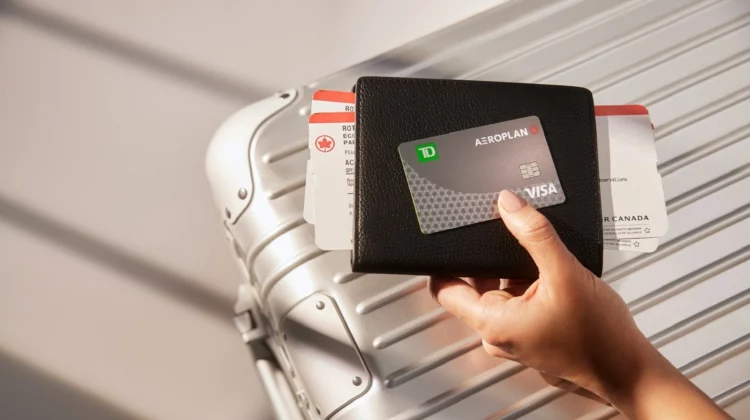
This is a detailed first-person account of a credit card incident involving a TD Visa card, a SaaS free trial, and a series of unexpected outcomes that continued even after the card was cancelled and replaced.
This is not a claim that all TD customers will experience the same issue. It is a factual timeline of one case based on call logs, support messages, card replacement events, and written communication with TD.
The purpose of sharing this experience is to highlight how modern card systems, merchant billing structures, and backend payment tokens can behave in ways many Canadian consumers may not fully understand.
What appears to be a simple “cancel your card and you are safe” solution can, in some cases, be more complicated.
How the Issue Started With a SaaS Free Trial
The situation began on April 8, 2026, after clicking an advertisement on X, formerly Twitter, promoting a SaaS platform offering a business tool with a 3-day free trial followed by a discounted monthly subscription.
The offer appeared straightforward. Users could try the platform for free for a short period and then continue at a discounted rate if they chose to remain subscribed.
Interested in testing the service, I entered my TD Visa credit card details to begin the trial.
However, immediately after entering payment information, the onboarding process did not function correctly. The system became stuck. The next button did not respond, and the signup flow could not be completed.
There was also no clear way to access an account dashboard, manage the subscription, or cancel the trial through the platform itself.
At that point, the situation shifted from a normal free trial experience to a credit card risk concern.
Contacting the Merchant and TD on the Same Day
On the same evening, I contacted the SaaS company’s support team at approximately 10:32 p.m. GMT to report that the onboarding process was not working.
A second message followed minutes later stating that I intended to cancel the transaction due to the technical issue and lack of access to the account.
Because I could not access the platform to manage or cancel the subscription, I contacted TD Visa support the same day.
During the call, I explained the following points clearly:
The subscription involved a 3-day free trial followed by a future charge
I could not access the merchant account to cancel
I did not want the future charge to occur
According to my records, the call lasted approximately 20 minutes.
TD’s response was to cancel the existing credit card and issue a replacement card with a new number and CVV, delivered through expedited shipping.
From a consumer perspective, this solution seemed like a strong protective measure at the time.
The SaaS Company Confirms a Technical Issue
On April 9, the SaaS support team responded confirming they were investigating a technical issue affecting onboarding.
By April 10, they confirmed the bug had been identified and fixed. According to their explanation, the issue was related to URL formatting and missing https prefixes, which prevented the signup flow from completing properly.
They later offered to restart the trial so I could properly test the service after the fix.
At that point, I assumed the payment risk had been neutralized because TD had already cancelled the original card and issued a new one.
That assumption would later prove incorrect.
The First Replacement TD Visa Card Shows a Serious Error
On April 13, the replacement TD Visa card arrived.
However, the card displayed an unexpected issue. Instead of showing the correct cardholder name, it showed an internal placeholder-like text reading “MISSING C NAME” along with an additional code.
For a replacement card issued by a major Canadian bank, this raised immediate concerns.
A second call was made to TD the same day, lasting approximately 26 minutes according to call records.
During that call, I requested clarification on how a replacement card could be issued with incorrect name data and whether this indicated a system or production error.
TD later reassured that a corrected card would be reissued within 5 to 10 business days.
TD Issues a Written Apology for the Card Error
On April 14, TD provided a written apology acknowledging the replacement card issue.
The communication confirmed that the incorrect name display was the result of a system error during card production and acknowledged the confusion caused.
This was important because it confirmed the issue was not isolated perception but an acknowledged system-level problem.
However, the replacement card issue was not the primary concern in the broader situation.
The more significant issue occurred later when a merchant charge still went through despite the card being cancelled.
The Unexpected SaaS Charge Still Goes Through
On April 17, the SaaS platform processed a charge of approximately 140 dollars, which posted on April 20.
This occurred after:
The original TD Visa card had been cancelled on April 8
A replacement card had been issued with new details
The bank had been notified of the risk before the charge occurred
From a consumer standpoint, this was unexpected. The assumption was that cancelling the card would prevent any future merchant charges tied to the original credentials.
When I contacted TD on April 20, the explanation provided was that the transaction should have been prevented by cancelling the subscription directly with the merchant.
While this aligns with general banking guidance for subscriptions, it did not address the core issue: the merchant had already been contacted, and access to the account was not available at the time of cancellation attempts.
TD Later Explains a Payment Token Was Not Removed
On April 30, TD followed up with a further explanation.
According to TD, the transaction occurred because a backend payment token associated with the merchant had not been removed when the card was replaced.
This token allowed the merchant’s billing system to continue processing the charge even though the physical card number had changed.
TD also indicated that future protection would require additional action, including issuing another replacement card to fully sever the connection.
This explanation introduced a key concept that many consumers are not familiar with: payment tokens and credential-on-file systems.
Why Card Replacement Alone May Not Stop Merchant Billing
Modern payment systems often use tokenization. Instead of storing a card number, merchants may store a secure token that represents the payment method.
Even when a card is cancelled and replaced, these tokens can sometimes remain active unless explicitly removed or updated.
This means that in certain cases, replacing a card may not immediately stop a merchant from billing the account if token-based authorization still exists.
This is not necessarily an error in every case. It is part of how recurring billing systems are designed to reduce payment interruptions. However, it can create unexpected outcomes when consumers are trying to stop charges.
Why “Just Cancel With the Merchant” Was Not Sufficient in This Case
Standard guidance from financial institutions often instructs customers to cancel subscriptions directly with merchants.
In most normal cases, this works.
However, in this situation:
The merchant account could not be accessed due to a technical issue
The bank was contacted before the future charge occurred
The bank’s recommended solution was card cancellation and replacement
Despite this, the merchant still successfully charged the account later through a tokenized payment route.
This raises an important gap between consumer expectations and how backend payment systems actually function.
What Canadian Cardholders Should Understand About Replacement Cards
Many consumers assume that:
Cancelling a credit card stops all future charges
Receiving a new card number automatically resets all billing relationships
Merchant access is immediately severed
In reality, modern payment ecosystems may include:
Merchant tokens
Network tokens
Digital wallet tokens
Recurring billing agreements
Account updater services
These systems can sometimes maintain continuity even when a card number changes.
Understanding this distinction is important when dealing with subscriptions, trials, and automated billing systems.
What TD Visa Cardholders Should Ask in Similar Situations
If a card is replaced due to suspected unauthorized or unwanted billing, it is important to ask specific questions beyond simply requesting a new card number.
These include whether:
Merchant tokens have been removed or revoked
Recurring billing permissions are still active
The merchant is blocked from future attempts
Account updater services are still connected
Digital wallet tokens remain active
The transaction was processed using stored credentials
Future charges will be automatically declined
These questions help clarify whether the issue is fully resolved at a system level, not just a surface-level card change.
What Consumers Should Do If a Similar Situation Occurs
If a charge appears after card replacement, it is important to act quickly.
Steps include:
Contacting the merchant in writing and requesting cancellation and confirmation of no future billing
Contacting the bank to determine whether tokenized or recurring billing systems were involved
Requesting confirmation that all merchant credentials and tokens have been removed or blocked
Documenting all communications and timestamps
Canadian consumer protection rules generally provide limited liability for unauthorized transactions, but proper documentation is essential in dispute resolution.
Why This Experience Matters Beyond One Transaction
This situation highlights a broader issue in modern digital payments: the gap between consumer expectations and backend payment infrastructure.
Consumers often believe card replacement is a complete reset. In reality, payment ecosystems are more interconnected than most people realize.
Banks, merchants, and payment networks operate through layered systems designed for convenience and continuity. However, those same systems can create confusion when a consumer is actively trying to stop a charge rather than continue one.
The Bigger Question for Banks and Consumers
The central issue raised by this experience is not whether subscription cancellations should be handled by merchants. In most cases, they should be.
The real question is what happens when:
A consumer cannot access a merchant account
The bank is contacted before a future charge
The bank’s solution is card replacement
Yet the charge still goes through due to backend token systems
In such cases, consumers need clearer explanations of what protections are actually being applied.
Card replacement alone may not always be sufficient without explicit token removal or merchant blocking at the network level.
Final Reflection
This experience shows how a routine free trial interaction can evolve into a complex financial issue involving technical systems that most consumers are never shown.
The key takeaway is not alarm, but awareness. Credit card replacement is not always a complete reset of payment relationships.
Understanding how tokens, recurring billing systems, and merchant credential storage work can help Canadian consumers make more informed decisions when dealing with subscriptions and free trials.
Banks, for their part, may need to provide clearer guidance when card replacement is used as a fraud prevention or charge prevention tool, especially in cases involving subscription-based services.