
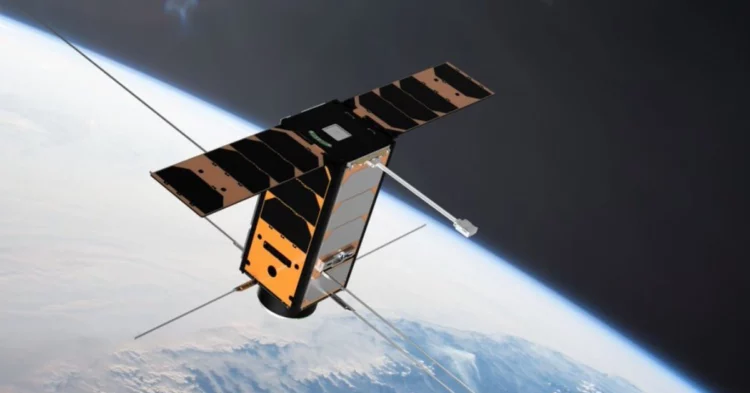
Did you know your mobile phone can now connect directly to Starlink satellites in space, even without a traditional signal? This revolutionary feature, called Starlink Direct-to-Cell, became available on July 15, 2025, and it allows compatible smartphones to communicate via satellite when no cell coverage is available.
Whether you’re hiking in the mountains, driving through rural areas, or stranded off-grid, this new capability could keep you connected when it matters most. Let’s dive into how it works, which phones are supported, when it will be available globally, and what to expect next.
Table of Contents
What Is Starlink Direct-to-Cell and How Does It Work?
A Satellite Connection That Activates Automatically
The most impressive part of Starlink’s Direct-to-Cell technology is its seamless operation. You don’t need an external antenna, satellite phone, or app. Your compatible smartphone will automatically connect to a passing Starlink satellite if there’s no regular signal from a cell tower.
This system uses built-in antennas in modern phones to locate and connect with satellites in low-Earth orbit, functioning like a space-based backup network. It’s designed for emergency or remote use — not for everyday high-speed internet yet.
What Can You Do With Starlink Direct-to-Cell Right Now?
Limited Features — But More Are on the Way
As of now, the service is limited to basic SMS (text messaging) and location sharing. You can’t yet make phone calls or use mobile data through Starlink, but those features are expected in future updates as the network evolves.
Here’s what’s currently supported:
- Send and receive text messages
- Share your live location
And in the future:
- Voice calls
- Mobile data usage
- Emergency services connectivity
Which Phones Are Compatible With Starlink Direct-to-Cell?
Not Every Smartphone Can Connect — Yet
Only specific models have the hardware required to connect to Starlink satellites. Here’s a breakdown of compatible devices:
iPhones
- iPhone 14
- iPhone 15
- iPhone 16
Android Phones
Google:
- Pixel 9 and newer
Samsung:
- Galaxy A14 and newer
- Galaxy S21 to S25
- Galaxy Z Flip 3 to Z Flip 6
- Galaxy Fold3 and newer
Motorola:
- Razr and Razr Plus (2024 models)
- Moto Edge (2024)
- Moto G Power 5G (2024)
If your phone isn’t on this list, you’ll need to upgrade to a compatible model if you want to use Starlink Direct-to-Cell.
Is Starlink Available in Spain or Other Countries?
Service Rollout Depends on Local Mobile Carrier Agreements
Although the technology is active, Starlink Direct-to-Cell is not yet available in Spain. Before it can go live, Starlink must form a partnership with a mobile provider in each country.
In Spain, this agreement is expected to happen between late 2025 and early 2026. Once signed, the service can go live shortly after.
Starlink Direct-to-Cell is already operating in:
- The United States (via T-Mobile)
- Canada
- Australia
- Japan
How Much Does Starlink Direct-to-Cell Cost?
No Extra Fees — Included in Your Regular Plan
Good news: this feature won’t cost you extra. You don’t need to pay for special hardware, subscribe to Starlink, or download any apps. It’s expected to be included in standard mobile plans through Starlink’s partner carriers.
This means if your mobile carrier has a deal with Starlink, and you have a compatible phone, you’re already set.
Scientists Warn of 2032 Asteroid Threat That Could Shatter the Moon and Ignite Earth’s Skies
How Robots and Technology Are Revolutionizing Water and Energy Networks
Will It Drain Your Phone Battery Faster?
Slightly Higher Battery Usage, But Manageable
Yes, satellite connectivity does use more power than connecting to nearby cell towers, since your phone is reaching much farther to communicate.
However, because the current system only supports texts and GPS-based location sharing, the battery impact is minimal — especially compared to data-heavy tasks like video streaming or navigation.
Final Thoughts: Is Starlink Direct-to-Cell the Future of Mobile Communication?
Starlink’s Direct-to-Cell service represents a massive shift in how we think about staying connected — especially in emergencies or remote regions. While still in its early stages, the potential is enormous. As full support for voice and data rolls out in the next couple of years, we may soon live in a world where “no signal” becomes a thing of the past.
Whether you’re a frequent traveler, outdoor explorer, or just want peace of mind, Starlink’s satellite connectivity could redefine mobile coverage across the globe.