
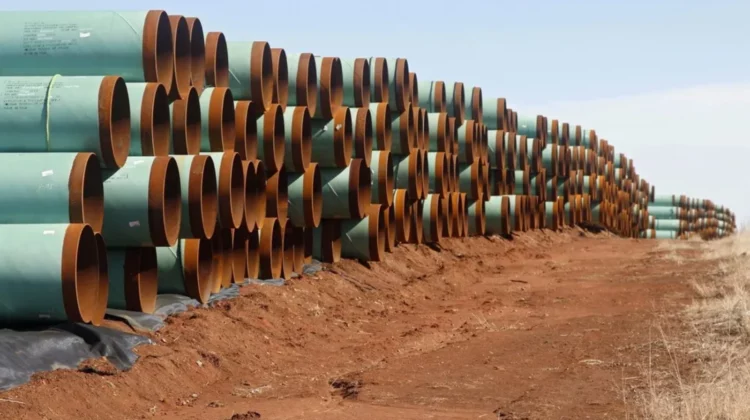
When U.S. President Donald Trump signals support for a Canadian oil pipeline project, it may appear at first glance to be a straightforward energy policy decision. But beneath the surface, the issue is far more complex. It touches local politics in both countries, economic pressures in resource-dependent regions, environmental debates, and the broader strategic relationship between the United States and Canada.
Commentators like Lorne Gunter have argued that such decisions are not simply about oil flow or infrastructure development. Instead, they reflect the intersection of political survival, regional economic dependency, and the need for leaders to respond to powerful local constituencies. In this context, Trump’s position on a Canadian pipeline becomes less about international energy cooperation and more about domestic political calculations shaped by local realities.
The Political Nature of Energy Infrastructure
Energy Projects as Political Instruments
Large infrastructure projects like oil pipelines are often framed as engineering or economic undertakings. In reality, they are deeply political. Every pipeline approval or rejection creates winners and losers across regions, industries, and communities.
For leaders like Trump, supporting a pipeline is not only about increasing energy supply or trade efficiency. It is also about signaling alignment with voters in key industrial states, labor unions tied to fossil fuel industries, and business groups that benefit from expanded energy transportation networks.
Similarly, in Canada, pipeline expansion is tied to provincial politics, particularly in energy-producing regions that rely heavily on oil sands development. These projects often become symbols of economic survival for entire provinces.
Why Pipelines Become National Issues
A pipeline beginning in Canada and crossing into the United States is not just a bilateral infrastructure project. It becomes a national debate in both countries because:
Local economies depend on construction jobs and long-term energy royalties
Environmental groups raise concerns about emissions and ecological risks
Indigenous communities in Canada and landowners in the U.S. may be directly affected
Federal governments must balance regional demands with international commitments
As a result, what starts as an engineering proposal quickly becomes a political battleground shaped by competing interests.
Trump’s Energy Strategy and Domestic Political Logic
Energy Independence as a Core Political Theme
During his presidency, Trump consistently promoted the idea of American energy independence. This meant maximizing domestic oil and gas production while ensuring secure and affordable energy imports when necessary.
Supporting a Canadian pipeline aligns with this approach because Canada is viewed as a stable and friendly supplier of crude oil. Unlike imports from politically unstable regions, Canadian oil is seen as strategically reliable.
However, Trump’s support was not purely geopolitical. It also reflected domestic political considerations.
Appealing to Industrial and Working-Class Voters
Many of Trump’s key supporters come from regions dependent on fossil fuel industries, including parts of the Midwest and Gulf Coast. These communities are often directly impacted by pipeline development through:
Construction jobs during pipeline building phases
Long-term employment in refining and transportation sectors
Lower energy costs that support manufacturing industries
By supporting pipeline infrastructure, Trump reinforces his political brand as a defender of working-class industrial America.
Balancing Environmental Opposition
At the same time, pipeline projects face strong opposition from environmental groups and climate policy advocates. Trump’s support for pipelines positions him against these groups, reinforcing a broader political divide over energy policy.
This tension is not just ideological. It reflects competing economic visions: one centered on traditional fossil fuel development and another focused on renewable energy transition.
Canadian Political Dimensions of Pipeline Expansion
Alberta’s Economic Dependence on Oil
On the Canadian side, pipeline expansion is closely tied to the economy of Alberta. The province is one of the largest producers of oil sands crude in the world, and its economic health depends heavily on export capacity.
Without sufficient pipeline infrastructure, Canadian oil often sells at a discount due to transportation bottlenecks. This creates strong political pressure within Canada to expand pipeline capacity into the United States.
Federal vs Provincial Tensions in Canada
Pipeline projects also expose tensions between Canada’s federal government and oil-producing provinces. While provinces like Alberta push aggressively for expansion, federal leaders must balance environmental commitments and national unity concerns.
This creates a political dilemma where:
Energy-producing regions demand infrastructure expansion
Urban and coastal regions often prioritize environmental protection
Federal leaders must attempt to reconcile both positions
This internal conflict influences how Canada engages with U.S. administrations on energy cooperation.
Local Politics Driving International Energy Decisions
The Role of Regional Economies
One of the central arguments in analyses like Lorne Gunter’s is that pipeline decisions are ultimately driven by local politics rather than abstract international strategy.
In both countries, regional economies depend heavily on energy infrastructure. This means elected officials are often more responsive to local economic pressures than to long-term environmental or diplomatic considerations.
For example:
In the U.S., governors and senators from energy-producing or industrial states advocate for pipeline approval
In Canada, provincial leaders lobby aggressively for export routes to U.S. refineries
These local pressures shape national policy outcomes in significant ways.
Employment and Economic Development Pressures
Pipeline construction projects represent large-scale temporary employment opportunities. Thousands of workers may be employed during construction phases, followed by long-term maintenance jobs.
For communities experiencing economic stagnation or industrial decline, pipelines are often seen as critical development opportunities. This creates strong grassroots political support that can influence national decision-making.
Environmental Debate and Political Polarization
Climate Policy Versus Energy Expansion
One of the most contentious aspects of pipeline politics is the clash between environmental goals and economic development. Climate advocates argue that expanding oil infrastructure locks in long-term fossil fuel dependence and undermines emissions reduction targets.
Supporters counter that:
Oil demand remains high globally
Energy security requires diversified supply sources
Cleaner extraction and transportation technologies are improving
This disagreement reflects a broader political polarization over how quickly societies should transition away from fossil fuels.
Local Environmental Concerns
Beyond global climate considerations, local environmental issues also play a major role. Pipeline routes often pass through sensitive ecosystems, farmland, or indigenous territories.
Concerns include:
Potential oil spills and groundwater contamination
Disruption of wildlife habitats
Land rights and consent issues for indigenous communities
These factors often generate legal challenges and public protests that delay or reshape pipeline projects.
Strategic Importance of U.S.-Canada Energy Trade
A Stable Cross-Border Energy Relationship
Despite political controversies, the United States and Canada maintain one of the most integrated energy relationships in the world. Canadian oil is a key input for many U.S. refineries, particularly those designed to process heavier crude.
This interdependence creates strong incentives for both countries to maintain and expand pipeline infrastructure.
Energy Security Considerations
From a strategic standpoint, importing oil from Canada reduces dependence on less stable global suppliers. This enhances North American energy security and reduces exposure to geopolitical disruptions.
For U.S. policymakers, this stability is often a decisive factor in supporting pipeline development, even when domestic political opposition exists.
Why Local Politics Ultimately Drives Pipeline Outcomes
The Power of Regional Interests
The central insight behind interpretations like Gunter’s argument is that pipeline decisions are rarely made solely at the national or international level. Instead, they are shaped by a mosaic of local interests that collectively influence federal policy.
These include:
Workers seeking employment opportunities
Local governments seeking tax revenue
Energy companies investing in infrastructure
Environmental groups advocating for restrictions
Each group exerts pressure that ultimately filters upward into national decision-making.
Elections and Political Survival
For elected officials, pipeline decisions can have direct electoral consequences. Supporting or opposing a pipeline can determine outcomes in key districts or provinces.
As a result, politicians often frame their positions in ways that align with the dominant economic interests of their constituencies rather than purely ideological commitments.
Conclusion: More Than Just a Pipeline
Trump’s approval or support of a Canadian oil pipeline cannot be understood as a simple energy policy decision. It is better seen as a reflection of layered political realities that span local economies, national energy strategies, and international relationships.
At its core, the issue demonstrates how modern infrastructure projects are deeply embedded in political systems. Pipelines are not just steel and engineering; they are instruments of economic survival, political negotiation, and strategic planning.