
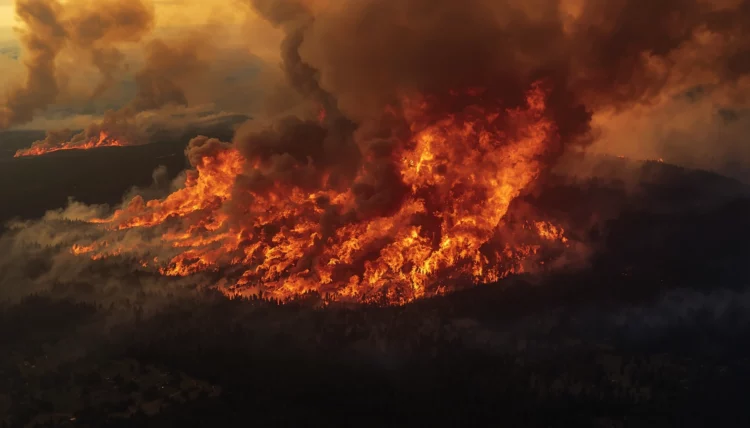
Ten years have passed since the catastrophic wildfire that tore through Fort McMurray, yet for many who lived through it, the memories remain vivid, unsettling, and deeply personal. What began as a forest fire in early May 2016 rapidly escalated into one of the most destructive natural disasters in Canadian history, forcing tens of thousands of residents to flee and leaving entire neighbourhoods reduced to ash.
For those who escaped, survival came with a cost that cannot be measured in property damage alone. The emotional imprint of that disaster continues to shape how people think about fire, safety, and the fragility of everyday life.
Rick Chezenko, now living in Nova Scotia, was among those who experienced the disaster firsthand. At the time, he was living in Fort McMurray with his brother. A decade later, his recollection is still raw, marked by images that are difficult to forget.
A Highway Escape Through Flames
As the fire advanced, evacuation became inevitable. For Chezenko, the escape itself felt surreal and terrifying. Driving out of the city meant passing through corridors of flame, where fire crept dangerously close to the highway.
The scene was unlike anything he had ever witnessed. Walls of fire stretched skyward, smoke darkened the horizon, and the sense of urgency was overwhelming. What should have been a straightforward drive turned into a race against an unpredictable and fast-moving disaster.
That journey out of Fort McMurray remains one of the most defining moments of his life, a stark reminder of how quickly normalcy can unravel.
Returning to Devastation
When residents were eventually allowed to return, the scale of destruction became fully apparent. Entire neighbourhoods had been wiped out. Homes, businesses, and familiar landmarks had vanished.
Chezenko described the aftermath as resembling a war zone. Streets once filled with life were now lined with rubble and charred remains. In many areas, structures had been burned completely to the ground, leaving little more than foundations behind.
The emotional toll of seeing one’s community erased is difficult to articulate. For many, rebuilding meant not only reconstructing homes but also confronting grief, loss, and uncertainty about the future.
The Lasting Psychological Impact of Wildfires
Trauma That Persists Over Time
Even a decade later, survivors of the Fort McMurray wildfire continue to carry the psychological weight of the experience. Events like these often leave lasting emotional scars, including anxiety, stress, and heightened sensitivity to environmental threats.
For individuals like Chezenko, the memory of flames, evacuation, and destruction has not faded. Instead, it serves as a constant reminder of how vulnerable communities can be in the face of natural disasters.
A Heightened Awareness of Risk
One of the lasting effects of surviving such a disaster is an increased awareness of fire risk. This awareness often translates into caution, particularly during dry seasons or in areas prone to wildfires.
Chezenko now urges others to take wildfire warnings seriously. His message is rooted in lived experience: it only takes a moment for conditions to escalate beyond control.
Nova Scotia’s Growing Wildfire Concerns
A Changing Climate and Rising خطر
A decade after the Fort McMurray disaster, regions far from Alberta are grappling with their own wildfire risks. Nova Scotia, in particular, has seen increasing concern over fire conditions, especially following periods of unusually dry weather.
Recent seasons have demonstrated that wildfire risk is no longer confined to traditionally fire-prone areas. Instead, changing climate patterns are expanding the threat to new regions.
Early Warning Signs in the Current Season
Fire officials in Nova Scotia have already observed troubling indicators early in the wildfire season. Spring grass fires have become more frequent, suggesting that conditions may worsen as temperatures rise.
Volunteer fire departments, often the first line of defense, are seeing increased activity earlier in the year. This shift raises concerns about what the peak summer months may bring.
The Role of Public Awareness
Fire chiefs emphasize that public cooperation plays a crucial role in preventing wildfires. Burn bans, restrictions on open-air fires, and adherence to local bylaws are essential measures designed to reduce risk.
In many cases, violations are not intentional. Instead, they stem from a lack of awareness. Once informed, most residents are willing to comply with regulations, highlighting the importance of education and communication.
The Hidden Danger in Nova Scotia’s Forests
Deadwood as Fuel
One of the most significant concerns facing Nova Scotia today is the abundance of deadwood in its forests. This material acts as highly combustible fuel, increasing the intensity and spread of wildfires.
Much of this debris is a lingering consequence of past storms, including post-tropical systems that caused widespread damage. Fallen trees and broken branches, left to dry over time, create ideal conditions for fires to ignite and spread rapidly.
Compounding Environmental Factors
Dry weather, strong winds, and accumulated forest debris combine to create a dangerous environment. When these factors align, even a small ignition source can lead to a large-scale wildfire.
This reality underscores the importance of proactive measures, including forest management, public awareness, and emergency preparedness.
Lessons Learned from Fort McMurray
The Importance of Preparedness
The Fort McMurray wildfire highlighted the need for communities to be prepared for worst-case scenarios. Emergency response plans, evacuation routes, and communication systems are all critical components of disaster readiness.
Communities that invest in preparedness are better equipped to respond quickly and effectively when emergencies arise.
Rapid Response and Coordination
Another key lesson is the importance of coordination among emergency services. Wildfires require a multi-agency response, including firefighters, law enforcement, medical teams, and government officials.
Efficient coordination can save lives, reduce damage, and ensure that resources are deployed where they are needed most.
Community Resilience
Despite the devastation, Fort McMurray also demonstrated remarkable resilience. Residents came together to support one another, rebuild their community, and move forward.
This resilience serves as a powerful reminder that while disasters can destroy physical structures, they cannot erase the strength and determination of a community.
A Message for the Present and Future
Personal Responsibility Matters
Chezenko’s message to residents in wildfire-prone areas is simple but urgent: think before acting. Everyday decisions, such as lighting a fire or discarding a cigarette, can have far-reaching consequences.
Wildfires often start small, but under the right conditions, they can grow rapidly. Preventing them requires collective responsibility and awareness.
Avoiding Complacency
As time passes, it can be easy to become complacent, especially in regions that have not historically experienced large wildfires. However, changing environmental conditions mean that past assumptions may no longer hold true.
The experiences of Fort McMurray serve as a warning that no community is immune.
Looking Ahead: Preparing for an Uncertain Future
Strengthening Fire Prevention Efforts
To address growing wildfire risks, communities must invest in prevention strategies. This includes enforcing regulations, improving public education, and managing forest conditions to reduce fuel loads.
Technology also plays an increasingly important role, from early detection systems to improved forecasting models.
Building Awareness Through Experience
Stories like Chezenko’s are powerful tools for raising awareness. Personal accounts bring a human perspective to what might otherwise be seen as abstract risks.
By sharing these experiences, communities can better understand the real impact of wildfires and the importance of prevention.
A Collective Effort
Ultimately, wildfire prevention and response require a collective effort. Governments, emergency services, and residents all have roles to play.
The lessons of the past decade make one thing clear: preparation, awareness, and responsibility are essential in reducing the impact of future wildfires.
Conclusion: A Decade Later, the Fire Still Speaks
Ten years after the wildfire that devastated Fort McMurray, its legacy continues to influence how people think about safety, risk, and resilience. For survivors like Rick Chezenko, the experience is a permanent part of their lives, shaping how they approach the present and the future.