
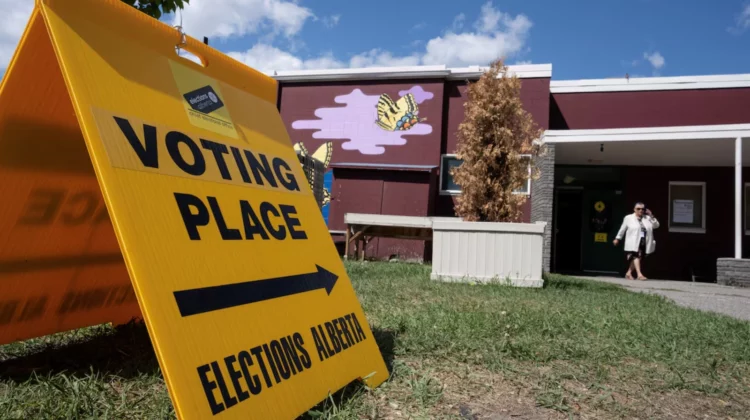
It would be easy to dismiss the Alberta voter data breach as the reckless mistake of a marginal political group. After all, the Republican Party of Alberta is hardly a dominant force in provincial politics. But focusing on its fringe status misses the larger and more troubling reality. This incident was not an isolated failure. It was the predictable outcome of a political culture shaped over years by the governing United Conservative Party, where bending rules has increasingly become normalized.
The breach itself involved the unauthorized exposure of Alberta’s voter list, a database containing sensitive personal information for roughly 2.9 million residents. While the immediate responsibility may lie with a small party, the systemic conditions that allowed such a breach to occur were cultivated at the highest levels of political power in the province.
How the Story Came to Light
The public first learned of the breach thanks to independent journalist Jeremy Appel, who attended a meeting of a separatist group known as the Centurion Project. What he uncovered was alarming: not only was the group in possession of the voter list, but authorities had already begun investigating.
Police, accompanied by officials from Elections Alberta, arrived with a formal notice indicating that the organization was under scrutiny for improper access to electoral data. The situation escalated quickly, revealing a chain of custody that raised serious questions about how such sensitive information had been handled.
Adding another layer to the timeline, journalist Jen Gerson had reportedly alerted Elections Alberta weeks earlier. Yet, due to legislative constraints introduced under the current government, the agency was unable to act swiftly.
The Role of Artificial Intelligence in Amplifying the Damage
What makes this breach particularly dangerous is not just the initial exposure, but what likely happened in the minutes—or even seconds—after the data went online. In today’s digital landscape, information spreads rapidly, often beyond recovery. Once exposed, data can be scraped, duplicated, and absorbed into machine learning systems.
The rise of artificial intelligence means that leaked datasets are no longer static risks. They become dynamic tools for misuse. Personal details such as names, addresses, and phone numbers can be integrated into systems designed for targeted scams, identity theft, or harassment campaigns.
Even if authorities succeed in removing the original source, the data itself may already be embedded in countless unseen databases. In practical terms, recovery becomes impossible.
Official Responses and Their Limitations
In response to the breach, Elections Alberta issued statements emphasizing its commitment to securing and recovering the compromised information. While such assurances are standard, they ring hollow given the realities of digital dissemination.
The agency also provided a timeline of its investigation, outlining how the voter list—originally distributed to registered political parties—ended up in the hands of a third-party advertiser. A judge eventually ordered the Centurion Project to take down its searchable database, which had been used to mobilize support for a proposed separation referendum.
The group’s leader, David Parker, publicly stated that they would comply with the investigation. But by that point, the damage had already been done. Once data is exposed online, even briefly, it can be copied indefinitely.
Why This Breach Matters for Ordinary Citizens
The scale of the breach means that nearly every voter in Alberta could be affected. For many, the consequences may be limited to an increased risk of spam or phishing attempts. But for others, the implications are far more serious.
According to Alberta’s information commissioner, Diane McLeod, certain groups face heightened risks. These include law enforcement personnel, public officials, and individuals fleeing domestic violence. For them, the exposure of home addresses and contact details could pose genuine threats to safety.
The incident underscores a fundamental issue: political data is not just abstract information. It is deeply personal, and its misuse can have real-world consequences.
A Legal Gap That Leaves Voters Vulnerable
One of the most striking aspects of this case is the legal framework that allowed it to happen. Alberta’s Personal Information Protection Act does not apply to political parties. This exemption exists because political parties themselves crafted the legislation.
The result is a significant accountability gap. While private companies must adhere to strict data protection standards, political organizations operate under looser rules. This creates an environment where sensitive information can be handled with insufficient oversight.
McLeod has called for political parties to be brought under the same regulatory umbrella as other organizations. While this proposal is logical, it faces an uphill battle. Political parties have little incentive to impose stricter rules on themselves.
The Case for Removing Voter Lists from Political Control
Given the risks, some argue that political parties should not have access to voter lists at all. This would mark a dramatic shift in how campaigns operate, but it could also restore a measure of trust.
Without access to centralized voter data, parties would need to engage more directly with the public. Campaigning would rely less on targeted outreach and more on broad-based communication. In theory, this could strengthen democratic participation by encouraging genuine dialogue rather than data-driven manipulation.
Critics might argue that such a move would disadvantage smaller parties. But the current system already creates inequalities, particularly when data is used to mobilize only the most ideologically committed supporters.
The Broader Political Culture Behind the Breach
To understand why this incident feels inevitable, it is necessary to look beyond the technical details and examine the broader political environment. In recent years, Alberta’s political landscape has been influenced by a style of governance that prioritizes winning over rule adherence.
This approach mirrors trends seen in other jurisdictions, particularly in the United States, where figures like Donald Trump have popularized a more confrontational and norm-defying style of politics. The idea that rules are flexible—or only apply to opponents—has gained traction.
In Alberta, this mindset has been reflected in the actions of various groups aligned with or adjacent to the governing party. Organizations such as the Take Back Alberta and the Alberta Prosperity Project operate within a broader ecosystem that often pushes boundaries.
Personnel frequently move between these groups, blurring the lines between official political structures and external advocacy organizations. This interconnected network creates opportunities for coordination, but also for lapses in accountability.
When Rule-Bending Becomes the Norm
The erosion of informal norms is a key factor in incidents like this. In the past, political actors often adhered to unwritten rules out of mutual self-interest. No party wanted to set a precedent that could later be used against them.
That restraint is fading. As political competition intensifies, the incentive to exploit every available advantage grows stronger. When one group crosses a line without facing consequences, others are likely to follow.
A previous case illustrates this dynamic. When a government minister improperly accessed voter data for personal political purposes, the response from authorities was notably lenient. Instead of imposing penalties, officials provided guidance on proper usage.
Such responses send a clear message: violations may not carry significant consequences. Over time, this encourages further risk-taking.
The Influence of Ideology and Strategy
Within Alberta’s political ecosystem, different groups play distinct roles. Some push more extreme ideas, expanding the range of acceptable discourse. Others focus on mobilizing specific voter segments or advancing particular policy agendas.
This division of labor can create plausible deniability for mainstream პოლიტიკური actors. Controversial positions can be floated by affiliated groups, allowing official leaders to distance themselves while still benefiting from the broader shift in public opinion.
The strategy is not unique to Alberta, but its impact is particularly visible in this case. The same network of organizations involved in ideological advocacy also intersected with the handling of sensitive voter data.
The Long-Term Consequences of the Breach
The immediate fallout from the data leak will likely include investigations, legal proceedings, and public debate. But the longer-term consequences may be more profound.
Trust in electoral systems is fragile. When voters believe their personal information is not secure, confidence in democratic institutions erodes. This can lead to disengagement, cynicism, and increased polarization.
Moreover, the integration of leaked data into AI systems introduces a new layer of risk. Unlike traditional breaches, which may fade over time, AI-driven misuse can persist indefinitely. Data can be repurposed in ways that are difficult to predict or control.
What Comes Next for Alberta
Addressing the root causes of this incident will require more than technical fixes. It will involve rethinking how political data is managed and regulated. Bringing political parties under existing privacy laws would be a significant step, but it may not be sufficient.