
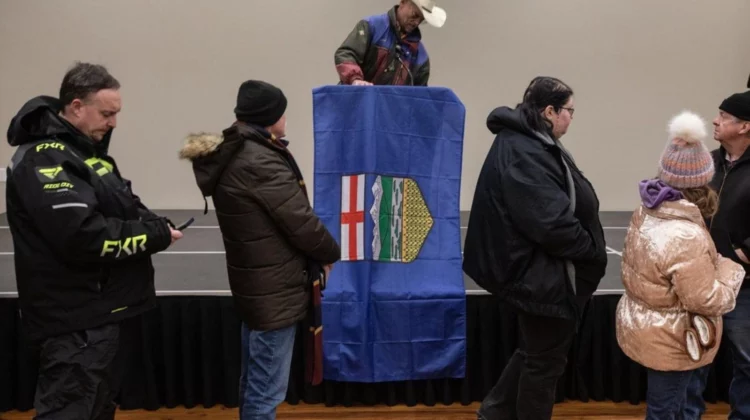
Alberta is once again confronting a question that has periodically surfaced throughout its history but rarely with such intensity or organization: should the province remain within Canada, or pursue a path toward independence? What was once a fringe political sentiment has evolved into a structured campaign, complete with organized leadership, widespread outreach, and a formal petition process aimed at triggering a provincewide referendum.
At the center of this movement is Stay Free Alberta, a group that has spent months mobilizing support across cities, towns, and rural communities. Their effort has now reached a pivotal moment, as organizers prepare to submit thousands of petition signatures to Elections Alberta in Edmonton. This development could set into motion a chain of political, legal, and constitutional events that may reshape Alberta’s future.
Yet the road ahead is far from straightforward. While the separatist campaign claims momentum, it faces significant legal challenges, particularly from First Nations groups who argue that such a referendum would violate longstanding treaty rights. With a court ruling imminent, Alberta finds itself balancing political ambition, constitutional law, and Indigenous sovereignty in a high-stakes moment.
The Petition Drive: From Grassroots Effort to Political Force
Building Momentum Across Alberta
The petition campaign led by Stay Free Alberta began in January, with an ambitious goal: gather enough verified signatures to compel the provincial government to consider a referendum on separation from Canada. Under Alberta law, citizen-initiated referendums require approximately 178,000 valid signatures, collected within a defined time frame and meeting strict verification standards.
According to Mitch Sylvestre, the leader of the group, that threshold has not only been met but exceeded. More than a month before the submission deadline, Sylvestre stated that the campaign had already gathered significantly more signatures than required. Volunteers and supporters have been active across the province, setting up booths, attending community events, and engaging directly with residents to build support.
The imagery surrounding the campaign reflects a strong sense of identity and regional pride. At petition-signing events, participants have been seen wearing “Alberta First” apparel, signaling a broader ideological movement that emphasizes provincial autonomy, economic independence, and dissatisfaction with federal policies.
What Happens After Submission
The submission of petition sheets to Elections Alberta marks the transition from grassroots mobilization to formal institutional review. Officials will now be responsible for verifying the authenticity and validity of the signatures. This process is meticulous and can take weeks, as each entry must meet legal requirements regarding residency, eligibility, and proper documentation.
If the petition passes verification, it triggers a legal obligation for the provincial government to respond. In this case, Premier Danielle Smith has already indicated a willingness to move forward with a referendum, provided the petition meets all criteria. This sets the stage for a potential provincewide vote as early as October.
Political Leadership and the Referendum Question
The Role of Premier Danielle Smith
Premier Danielle Smith has taken a cautiously open stance on the issue of Alberta separation. While she has not explicitly endorsed leaving Confederation, she has emphasized the importance of democratic processes and public input. Her position suggests that if a sufficient number of Albertans demonstrate support through the petition, the government should allow the question to be decided through a referendum.
This approach places Smith in a delicate position. On one hand, she must respect the democratic mechanism that allows citizen-initiated referendums. On the other, she must consider the economic, political, and constitutional consequences of even entertaining the possibility of separation.
Timing and Political Implications
If the petition is validated, the referendum could take place as early as October. Such timing would have significant political implications, not only for Alberta but for Canada as a whole. A referendum campaign would likely dominate public discourse, influence provincial policy decisions, and attract national and international attention.
The framing of the referendum question itself will also be crucial. The wording must be clear, legally sound, and capable of capturing the complexity of the issue without misleading voters. This alone could become a point of contention among political leaders, legal experts, and advocacy groups.
Legal Challenges: Treaty Rights and Constitutional Limits
First Nations Opposition
One of the most significant obstacles facing the separatist movement is a legal challenge brought forward by a coalition of Alberta First Nations. These groups argue that the petition process, and any subsequent referendum, cannot override treaty rights that were established between Indigenous peoples and the Crown.
From their perspective, Alberta does not have unilateral authority to separate from Canada in a way that disregards these agreements. Treaties are not merely historical documents; they are legally binding commitments that continue to shape governance, land use, and jurisdiction.
The Court’s Role
An Edmonton judge is expected to issue a ruling on this challenge in the coming days. The outcome could have far-reaching consequences. If the court finds that the petition violates treaty rights, it could halt the referendum process entirely or require significant modifications.
Alternatively, if the court allows the petition to proceed, it does not necessarily resolve the underlying legal issues. Questions about Indigenous consent, constitutional authority, and federal involvement would likely persist, potentially leading to further litigation.
Broader Constitutional Questions
Beyond treaty rights, Alberta’s potential separation raises complex constitutional questions. Canada’s legal framework does not provide a straightforward mechanism for a province to unilaterally leave Confederation. Any attempt to do so would likely require negotiations with the federal government and other provinces, as well as possible amendments to the Constitution.
This means that even if a referendum were successful, it would represent the beginning of a long and uncertain process rather than an immediate path to independence.
Public Sentiment: Divided Opinions and Regional Identity
Support for Separation
Supporters of the separatist movement often cite economic grievances and a perceived lack of representation within the federal system. Many argue that Alberta’s energy sector, a cornerstone of its economy, has been unfairly constrained by federal policies. Others feel that the province contributes more to the national economy than it receives in return.
For these individuals, separation represents an opportunity to assert greater control over resources, taxation, and governance. The “Alberta First” message resonates strongly in this context, emphasizing self-determination and regional pride.
Opposition and Concerns
Opponents of separation raise concerns about economic uncertainty, political instability, and the practical challenges of establishing a new nation. Questions about currency, trade agreements, defense, and international recognition remain largely unanswered.
There is also concern about the potential impact on social cohesion. A referendum campaign could deepen divisions within the province, as communities grapple with differing visions for Alberta’s future.
Economic Considerations: Risks and Opportunities
The Case for Independence
Proponents of separation often argue that Alberta’s natural resources provide a strong foundation for economic independence. With significant oil and gas reserves, the province has the potential to generate substantial revenue.
They also suggest that independence could allow for more flexible trade policies, reduced regulatory constraints, and a tax system tailored to local needs.
The Challenges Ahead
However, economists caution that separation would come with considerable risks. Alberta is deeply integrated into the Canadian economy, and disentangling these connections would be complex. Trade relationships, financial systems, and labor mobility could all be affected.
There is also the question of debt. Alberta would likely need to negotiate its share of Canada’s national debt, which could place a significant financial burden on the new entity.
The Path Forward: Uncertainty and Possibility
Waiting for Verification and Rulings
In the immediate term, all eyes are on two key developments: the verification of petition signatures and the court ruling on the legal challenge. These will determine whether the separatist movement can proceed to the next stage.
A Defining Moment for Alberta
Regardless of the outcome, the current situation represents a defining moment for Alberta. It highlights the province’s evolving political identity and raises fundamental questions about governance, representation, and the nature of Confederation.
The conversation is no longer confined to the margins. It is now a central issue that demands attention from policymakers, legal experts, and citizens alike.
Conclusion: A Province at the Edge of Decision
Alberta stands at a crossroads, facing a decision that could reshape its future for generations. The separatist petition has brought long-standing tensions to the forefront, forcing a reckoning with questions of autonomy, identity, and belonging.
Whether the movement ultimately leads to a referendum or is halted by legal challenges, its impact is already being felt. It has sparked debate, mobilized communities, and challenged assumptions about the stability of Canada’s provincial framework.