
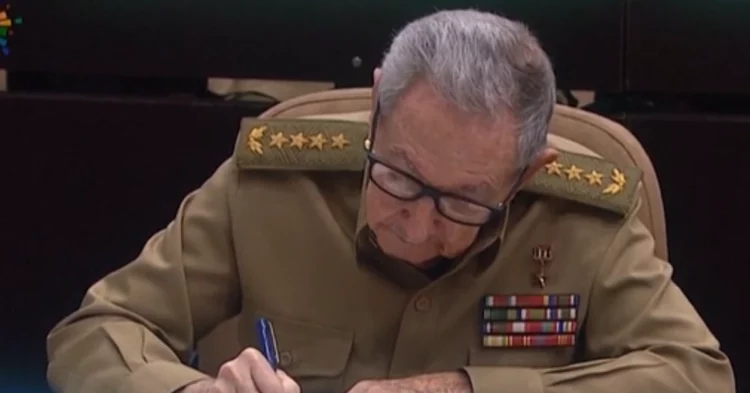
The decision by the United States to charge former Cuban leader Raúl Castro over the 1996 shootdown of two civilian aircraft has reignited one of the most controversial chapters in US-Cuba relations. Nearly three decades after the deadly incident over the Florida Straits, the case has once again placed Cuba’s communist leadership under intense international scrutiny.
US prosecutors announced charges accusing Raúl Castro and several other Cuban officials of conspiracy to kill US nationals, destruction of aircraft, and multiple counts of murder linked to the deaths of four men connected to the Cuban-American humanitarian group Brothers to the Rescue. The announcement has dramatically escalated tensions between Washington and Havana at a time when economic pressure, sanctions, and political confrontation are already straining relations between the two countries.
The indictment also raises major geopolitical questions. Why is the case resurfacing now? What evidence does the US claim to have against Castro? Could the former Cuban leader ever realistically face trial in an American court? And how might this move reshape future relations between Cuba and the United States?
This detailed article examines the historical background of the 1996 aircraft shootdown, the latest charges against Raúl Castro, the political motivations behind the indictment, reactions from Cuba and Cuban exiles, and the broader implications for Latin American politics.
The 1996 Brothers to the Rescue Incident
What Happened Over the Florida Straits
On 24 February 1996, two small civilian aircraft operated by the Cuban-American organisation Brothers to the Rescue were shot down by Cuban military fighter jets over waters between Cuba and Florida. The attack killed all four people aboard the planes.
The victims included three US citizens:
- Armando Alejandre Jr
- Carlos Alberto Costa
- Mario Manuel de la Peña
The fourth victim was Pablo Morales, a US resident.
The organisation Brothers to the Rescue had been founded by Cuban exiles in Miami. Originally, the group focused on humanitarian missions aimed at locating Cuban migrants attempting dangerous sea crossings toward the United States. Over time, however, the Cuban government accused the organisation of carrying out provocative political operations and violating Cuban airspace.
Cuban authorities claimed the aircraft repeatedly entered restricted territory and threatened national sovereignty. The United States, however, maintained the planes were operating in international airspace when they were destroyed.
International Outrage After the Shootdown
The incident sparked immediate international condemnation. Governments around the world criticised Cuba’s use of military force against unarmed civilian aircraft.
At the time, Raúl Castro served as Cuba’s defence minister and head of the armed forces under his brother Fidel Castro’s government. US officials argued that the attack could not have occurred without approval from the highest levels of Cuban leadership.
The shootdown became one of the defining moments of post-Cold War hostility between Cuba and the United States. It also played a major role in strengthening US sanctions through the Helms-Burton Act, legislation that intensified the American economic embargo against Cuba.
Why the US Is Charging Raúl Castro Now
New Legal Action After Decades
The latest indictment announced in Miami accuses Raúl Castro of direct involvement in planning and authorising the attack. Acting US Attorney General Todd Blanche stated that the charges include conspiracy to kill US nationals, destruction of aircraft, and four counts of murder.
The murder charges alone carry the possibility of life imprisonment or even the death penalty under US law.
The timing of the indictment is significant. The United States has recently increased pressure on Cuba’s communist government amid worsening economic conditions on the island, widespread shortages, and growing dissatisfaction among Cuban citizens.
Political analysts believe the charges are not merely about revisiting history but also part of a broader strategy designed to isolate and weaken Cuba’s leadership.
Pressure on Cuba’s Communist Government
The Cuban economy has suffered severe difficulties in recent years. Food shortages, fuel scarcity, blackouts, inflation, and declining tourism have created widespread frustration across the island.
The US has continued tightening sanctions targeting sectors linked to the Cuban military and government-controlled businesses. Washington has also accused Cuba’s leadership of suppressing dissent and failing to implement democratic reforms.
Experts say the indictment against Raúl Castro adds another layer of pressure on Havana by targeting one of the most symbolic figures of the Cuban Revolution.
William LeoGrande, a Latin American politics specialist at American University, suggested that Washington’s strategy may involve increasing pressure gradually in hopes of forcing concessions from the Cuban government.
Cuba’s Furious Response to the Charges
Miguel Díaz-Canel Rejects the Accusations
Cuban President Miguel Díaz-Canel strongly condemned the indictment, calling it politically motivated and legally baseless.
According to Cuban officials, the US is manipulating historical events to justify aggressive actions against Cuba’s sovereignty. Díaz-Canel accused Washington of distorting the facts surrounding the 1996 incident and insisted that Cuba acted in legitimate self-defence.
Cuba has long maintained that Brothers to the Rescue repeatedly violated Cuban airspace and ignored warnings from authorities. Cuban officials argue that the aircraft posed a threat to national security.
State media outlets in Cuba also attacked the indictment, describing the accusations as “false” and part of a broader campaign to destabilise the island’s government.
Cuba’s Fear of Escalation
The indictment has fuelled fears within Cuba that the United States could pursue more aggressive measures in the future.
Some analysts drew comparisons to the US operation involving Venezuelan President Nicolás Maduro after Washington previously indicted him on criminal charges. Although the situations differ significantly, the legal precedent has raised concerns among Cuban officials about the possibility of future American operations targeting senior Cuban figures.
However, experts caution that Cuba is unlikely to surrender or cooperate under external pressure. The Cuban government has historically resisted US demands and often frames confrontations with Washington as battles for national sovereignty.
Raúl Castro’s Legacy and Political Influence
The Brother of Fidel Castro
Raúl Castro remains one of the most influential figures in modern Cuban history. As the younger brother of Fidel Castro, he played a central role in the Cuban Revolution that brought communist rule to the island in 1959.
For decades, Raúl Castro oversaw Cuba’s military and intelligence services before eventually succeeding Fidel as president in 2008.
Although he officially stepped down from leadership roles years ago, many Cubans still view him as a symbolic authority figure within the political system.
The Obama Era Thaw
During Raúl Castro’s presidency, relations between Cuba and the United States briefly improved under former US President Barack Obama.
The two governments restored diplomatic relations, reopened embassies, and eased certain travel and trade restrictions. Obama’s historic visit to Havana in 2016 marked the closest relations between the two countries in decades.
However, the diplomatic thaw proved short-lived. The Trump administration reversed many Obama-era policies and imposed stricter sanctions on Cuba.
The latest indictment signals that Washington’s hardline stance toward Havana remains firmly in place.
Reaction Among Cuban-Americans in Miami
Emotional Scenes at Freedom Tower
The announcement of the indictment took place at Freedom Tower in Miami, a location deeply symbolic for Cuban exiles.
The venue was filled with members of Cuban-American organisations, many of whom have spent decades demanding accountability from Cuba’s communist leadership.
Families of the victims and supporters described the indictment as long-overdue justice.
Many attendees expressed satisfaction that the US government was finally pursuing criminal charges against Raúl Castro despite the passage of nearly thirty years since the incident.
Calls for Accountability
For many Cuban exiles, the indictment represents more than a legal action. It symbolises recognition of decades of suffering under Cuba’s communist government.
Several exile activists argued that Raúl Castro bears responsibility not only for the 1996 shootdown but also for broader human rights abuses committed during Cuba’s revolutionary period.
The announcement also reinforced strong political support for hardline Cuba policies among many Cuban-American voters, particularly in South Florida.
Could Raúl Castro Ever Face Trial?
Legal Challenges
Despite the dramatic announcement, many legal experts believe it is highly unlikely that Raúl Castro will ever appear in a US courtroom.
Castro is now in his mid-90s and remains inside Cuba, where the government would almost certainly refuse any extradition request.
Still, US prosecutors insist the indictment has legal significance even if a trial never occurs.
The charges create an active arrest warrant and formally establish criminal accusations against the former Cuban leader.
Symbolic Importance of the Case
Legal analysts note that international indictments often serve broader political purposes beyond securing convictions.
By formally accusing Raúl Castro, the US government reinforces its position that senior Cuban officials can be held personally accountable for actions against American citizens.
The indictment also sends a message to other governments that Washington is willing to pursue legal action against foreign leaders accused of crimes involving US nationals.
Marco Rubio’s Role in the Pressure Campaign
Strong Criticism of Cuba’s Government
US Secretary of State Marco Rubio has become one of the leading voices advocating tougher measures against Cuba.
Rubio recently accused Cuba’s military-controlled conglomerate GAESA of contributing to the island’s economic crisis. According to US officials, GAESA controls large sectors of Cuba’s economy, including ports, fuel distribution, tourism infrastructure, and major hotels.
The United States argues that military dominance over the economy has worsened corruption, inefficiency, and shortages for ordinary Cubans.
Independence Day Message to Cuba
Rubio’s message to the Cuban people on the country’s independence day further highlighted the growing confrontation between Washington and Havana.
He claimed that President Donald Trump was offering “a new path” for relations with Cuba while simultaneously criticising the current leadership for economic mismanagement and repression.
Cuban officials immediately rejected Rubio’s statements and accused the United States of imposing collective punishment through sanctions.
The Future of US-Cuba Relations
Rising Tensions Between Washington and Havana
The indictment of Raúl Castro is likely to deepen tensions between the United States and Cuba even further.
Diplomatic relations are already strained due to sanctions, migration disputes, economic restrictions, and political disagreements.
The new criminal charges may reduce the possibility of renewed diplomatic engagement in the near future.
A Return to Cold War-Style Hostility
Some analysts believe the relationship between the two countries is increasingly returning to a Cold War-style confrontation.
The United States continues applying economic and political pressure, while Cuba portrays itself as resisting foreign aggression and defending national independence.
At the same time, growing economic hardship inside Cuba creates uncertainty about how long the current political system can maintain stability without reforms.
Conclusion
The indictment of Raúl Castro over the 1996 Brothers to the Rescue shootdown marks a major escalation in the long-running conflict between Cuba and the United States. Nearly thirty years after the deaths of four men over the Florida Straits, Washington is revisiting one of the darkest moments in US-Cuba relations with criminal charges against one of the most powerful figures in Cuban history.
While the likelihood of Raúl Castro standing trial remains extremely low, the political impact of the indictment is already significant. The move intensifies pressure on Cuba’s leadership, energises Cuban exile communities in the United States, and reinforces Washington’s hardline approach toward Havana.
As economic struggles continue to challenge Cuba’s communist government, the case also highlights the enduring influence of historical grievances on modern geopolitics. The legacy of Fidel Castro, Raúl Castro, and the Cuban Revolution continues to shape international relations decades after the Cold War officially ended.