
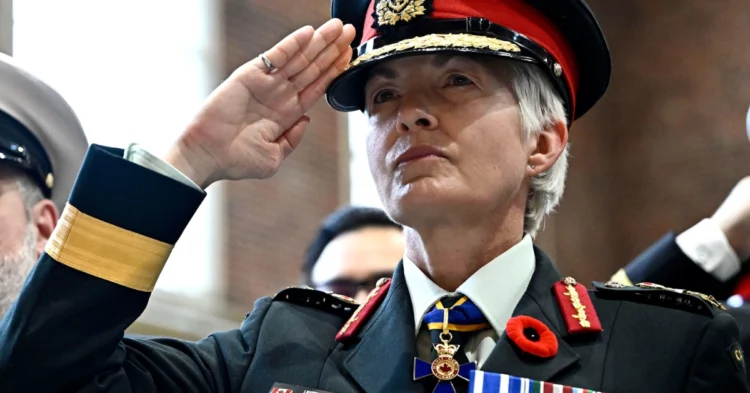
Canada has officially announced its intention to place one of its most respected military leaders at the center of NATO’s strategic decision-making structure. Defence Minister David McGuinty confirmed that Gen. Jennie Carignan has been nominated to become the next chair of NATO’s military committee, one of the alliance’s most influential military leadership positions.
The announcement marks a major milestone not only for Canada’s defence establishment but also for NATO at a time when the alliance faces mounting geopolitical uncertainty, internal political pressure, and growing security concerns across Europe.
If elected during the NATO vote scheduled for September, Carignan would assume the role next summer after the current chair, Admiral Giuseppe Cavo Dragone, completes his term. Until then, she will continue serving as Canada’s chief of the defence staff, a position she has held since 2024.
The nomination immediately attracted international attention because it places Canada in a central leadership conversation at a critical moment for the Western military alliance.
Why the NATO Military Committee Chair Position Matters More Than Ever
The chair of NATO’s military committee is not a ceremonial title. It is one of the alliance’s most powerful and strategically important military appointments.
The committee chair acts as the senior military adviser to NATO Secretary General Mark Rutte and serves as the primary channel for military advice from the chiefs of defence representing all 32 NATO member nations.
The role requires diplomacy, military expertise, political awareness, and the ability to balance competing priorities among allies with different strategic interests. The chair must maintain cohesion among member states while ensuring military readiness across multiple global flashpoints.
At present, NATO is dealing with several major challenges simultaneously:
Rising Security Tensions in Europe
Russia’s continued aggression and instability in Eastern Europe remain major concerns for NATO leaders. European allies are under pressure to strengthen defence coordination and military preparedness.
Questions About America’s Long-Term Commitment
There are growing fears among European governments that the United States could eventually reduce its military footprint in Europe. Political rhetoric in Washington has increased anxiety over whether future American administrations will maintain the same level of commitment to NATO.
Defence Spending Pressure
Many NATO members have faced criticism for failing to meet the alliance’s defence spending benchmark of 2 percent of GDP. Canada itself spent years under scrutiny before recently moving closer to the target.
Expanding Global Threats
NATO’s focus has expanded beyond conventional warfare to include cybersecurity threats, artificial intelligence in warfare, hybrid attacks, and challenges posed by emerging geopolitical powers.
Against this backdrop, the election of a NATO military committee chair carries enormous significance.
Gen. Jennie Carignan’s Military Career Has Prepared Her for NATO Leadership
Gen. Jennie Carignan is widely regarded as one of Canada’s most accomplished military leaders. Her career spans decades of operational command, strategic planning, engineering expertise, and international military cooperation.
Her leadership style has often been described as disciplined, collaborative, and highly strategic. Those qualities are particularly important within NATO, where consensus-building among member states is essential.
Carignan made history in 2024 when she became Canada’s chief of the defence staff, the highest-ranking military officer in the country. Her appointment represented a significant moment for the Canadian Armed Forces and reflected broader efforts to modernize military leadership structures.
Before reaching the top military position in Canada, Carignan served in numerous command roles, including overseas deployments and senior leadership positions within the Canadian Army.
Her background gives her credibility both domestically and internationally, especially among allies seeking experienced leaders capable of navigating increasingly complex global security challenges.
Canada’s NATO Ambitions Reflect a Broader Strategic Shift
The Liberal government’s decision to nominate Carignan is not simply about filling a prestigious international position. It also reflects Canada’s broader attempt to reassert itself within NATO after years of criticism over defence spending and military readiness.
For much of the past decade, Canada faced persistent pressure from allies, particularly the United States, over its defence expenditures. NATO members repeatedly urged Ottawa to increase military investments and modernize its capabilities.
Recently, however, Canada has attempted to reposition itself as a more engaged and reliable NATO partner.
The nomination of Carignan sends several strategic messages:
Canada Wants Greater Influence Within NATO
By placing a Canadian candidate at the center of NATO military leadership, Ottawa is signaling that it wants a stronger voice in alliance decision-making.
Canada Is Rebuilding Defence Credibility
The move demonstrates that Canada intends to play a more active role in shaping NATO’s future security strategy.
Canada Supports Multilateral Military Cooperation
The nomination reinforces Canada’s long-standing belief in international military alliances and cooperative defence structures.
Minister David McGuinty emphasized this point during the announcement, describing Carignan as an exceptional military leader with deep commitment to allied collaboration.
Understanding the Difference Between NATO’s Top Military Roles
Many people confuse the chair of NATO’s military committee with the supreme allied commander Europe position, but the two roles are very different.
Chair of NATO Military Committee
This role focuses on strategic military advice, coordination, diplomacy, and facilitating communication among NATO defence chiefs.
The chair does not directly command military operations but instead helps shape alliance-wide military guidance and consensus.
Supreme Allied Commander Europe
This position oversees NATO military operations and commands allied forces during missions and crises.
Traditionally, the role is held by an American general, reflecting the United States’ dominant military role within NATO.
Understanding this distinction is important because Carignan’s potential role would place her at the center of NATO strategy and political-military coordination rather than battlefield command.
NATO Faces Political Turbulence Amid Global Uncertainty
Carignan’s nomination comes during one of the alliance’s most politically sensitive periods in recent years.
European governments remain deeply concerned about long-term stability in transatlantic relations. The possibility of reduced American engagement has forced NATO members to reconsider their defence strategies and burden-sharing responsibilities.
At the same time, NATO continues expanding its security focus beyond Europe. Cyber warfare, disinformation campaigns, infrastructure protection, and Arctic security have all become increasingly important topics within alliance discussions.
Canada has a particular interest in Arctic security due to its northern geography and growing competition in polar regions.
Carignan’s leadership experience could therefore prove especially valuable as NATO adapts to evolving strategic realities.
The Symbolic Importance of a Canadian Leading NATO’s Military Committee
The last Canadian to hold the chair position was retired general Ray Henault in the early 2000s.
Bringing the role back to Canada would carry significant symbolic and diplomatic importance.
A Recognition of Canadian Military Professionalism
The nomination reflects international respect for Canada’s military leadership and operational contributions within NATO missions.
A Potential Milestone for Women in Military Leadership
Carignan’s candidacy also highlights the growing role of women in senior military leadership positions globally.
Her election would represent another historic step in breaking longstanding barriers within international defence institutions.
Strengthening Canada’s Global Reputation
Holding one of NATO’s most influential military advisory roles would elevate Canada’s profile in global security discussions.
NATO Allies Will Carefully Weigh the September Election
The election process for NATO military committee chair is highly diplomatic and involves careful consideration by member nations.
Every NATO ally brings different priorities to the table:
Eastern European Members
Countries closer to Russia’s sphere of influence often prioritize strong deterrence and rapid military readiness.
Western European Allies
These nations may focus more heavily on alliance cohesion, defence integration, and political stability.
The United States
Washington’s support carries significant influence in NATO leadership decisions due to America’s dominant military role.
Carignan’s ability to build trust across these diverse perspectives could become a decisive factor during the election process.
Canada’s Military Leadership Transition Could Shape Domestic Defence Policy
If Carignan is elected next year, Canada will also need to prepare for another transition in military leadership at home.
The chief of the defence staff position traditionally lasts around three years, although there is no fixed term.
Her eventual departure from Canada’s top military role could influence several important domestic issues:
Military Modernization Efforts
Canada continues investing in equipment upgrades, Arctic capabilities, and operational readiness improvements.
Recruitment and Retention Challenges
Like many Western militaries, Canada faces difficulties attracting and retaining personnel.
International Defence Commitments
Canada remains heavily involved in NATO missions and multinational military cooperation efforts.
A leadership transition could shape how these priorities evolve in coming years.
Europe Watches NATO’s Future With Growing Concern
Across Europe, leaders increasingly recognize that NATO is entering a transformational period.
Russia’s war in Ukraine fundamentally reshaped European security calculations, pushing many nations to dramatically increase defence spending and military coordination.
At the same time, uncertainty surrounding future American foreign policy has created pressure for European allies to become more self-reliant.
NATO officials are therefore seeking leaders capable of maintaining alliance unity while adapting to changing geopolitical conditions.
Carignan’s supporters believe her collaborative leadership style and operational experience make her well suited for that responsibility.
The Broader Global Implications of NATO Leadership Changes
Leadership appointments inside NATO often have consequences beyond the alliance itself.
Global powers such as China closely monitor NATO developments as the organization increasingly expands its focus into Indo-Pacific security discussions, cyber threats, and technological competition.
Meanwhile, adversaries attempt to exploit any signs of division within the alliance.
The selection of NATO’s next military committee chair will therefore be interpreted internationally as a signal about the alliance’s future direction, unity, and strategic priorities.
Canada’s NATO Nomination Represents More Than Diplomacy
The Liberal government’s nomination of Gen. Jennie Carignan represents far more than a routine military appointment.
It reflects Canada’s effort to strengthen its global influence, reinforce its commitment to NATO, and position itself as a serious contributor to Western collective security during a period of global instability.
The move also underscores NATO’s evolving priorities as the alliance confronts political uncertainty, shifting military threats, and questions about future transatlantic cooperation.
If elected, Carignan would become one of the most influential military figures within NATO at a time when the alliance is navigating one of the most consequential periods in its modern history.