
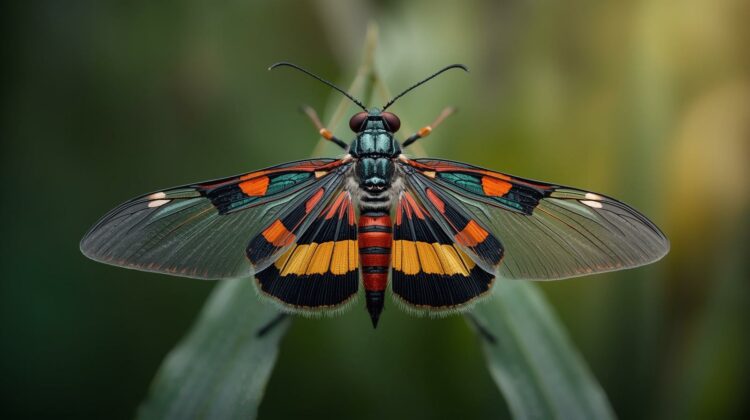
A recent discovery of the invasive Spotted lanternfly in St. Catharines has reignited concern among scientists, farmers, and agricultural authorities about the pest’s potential spread into Canada. While there are still no confirmed breeding populations in the country, experts say the risk is growing and the consequences could be severe if the insect establishes itself.
A Routine Inspection Turns Into a Warning Sign
The latest sighting came when Aidan Dagg, a nursery inspector in St. Catharines, found a dead spotted lanternfly and uploaded it to iNaturalist. Having monitored for the insect for years, this was his first confirmed find.
After reporting it to the Canadian Food Inspection Agency, inspectors responded the same day. Their investigation uncovered around 30 more dead lanternflies hidden within a shipment of planting pots imported from Pennsylvania that had been sitting since the previous fall.
This discovery highlights a key concern: the insect’s ability to travel long distances unnoticed through trade and transportation.
Why the Spotted Lanternfly Is a Serious Threat
The spotted lanternfly is not just another insect. Native to Asia, it is a highly destructive pest that feeds on plant sap, weakening or even killing plants over time. According to the CFIA, it can attack more than 100 species of plants, including:
- Grapevines
- Fruit trees
- Maple and hardwood trees
Its impact on vineyards is especially alarming. Ontario’s wine industry, already a major economic contributor, could face significant losses if the pest spreads.
When feeding, lanternflies also excrete a sticky substance known as honeydew, which promotes mold growth and further damages crops.
A Master of Hitchhiking
Unlike many insects, spotted lanternflies are not strong flyers. However, what they lack in flight, they make up for in mobility.
Researchers say the insect is an exceptional hitchhiker. It can cling to:
- Vehicles and trucks
- Shipping containers
- Outdoor equipment
- Even train cars
In fact, studies have shown adult lanternflies can hold onto a car traveling up to 95 km/h. Egg masses are even harder to detect, often appearing as small patches on flat surfaces.
This explains how the pest continues to spread northward from the United States despite natural barriers like the Great Lakes.
Growing Across the United States
Since it was first detected in the U.S. in 2014, the spotted lanternfly has expanded rapidly and is now present in 19 states. The economic consequences are already significant.
A study by Penn State College of Agricultural Sciences estimated that Pennsylvania alone was losing over $50 million annually in affected regions. In a worst-case scenario, losses could exceed $500 million per year and threaten thousands of jobs.
Because of this, U.S. authorities actively encourage people to kill the insect on sight to limit its spread.
Climate Is Not a Barrier
One of the biggest concerns for Canada is that climate may not stop the lanternfly.
Research involving Natural Resources Canada shows that:
- The insect thrives in hot conditions, even during extended heat waves
- It can survive extreme cold, with eggs enduring temperatures below -20°C
Experiments conducted in cities like Chicago found that egg survival rates remained high despite harsh winters. This challenges the assumption that Canada’s colder climate would naturally protect it.
Ontario on High Alert
Authorities are now urging increased vigilance, particularly in regions with strong agricultural industries such as Niagara and Essex County.
The key message is early detection. Since there are no established populations yet, Canada still has a chance to prevent a full-scale infestation.
Residents and workers in agriculture, transportation, and trade are being encouraged to:
- Inspect vehicles and equipment returning from the U.S.
- Check outdoor surfaces for egg masses
- Report any suspected sightings immediately
What Happens Next
The discovery in St. Catharines does not mean the insect has established itself in Ontario, but it does confirm that it is reaching Canadian soil.
Experts warn that it only takes a small number of surviving insects to start a population. Once established, eradication becomes extremely difficult and costly.
For now, Canada remains in a critical prevention phase. But as cross-border trade continues and climate conditions remain favorable, the pressure is building.
The spotted lanternfly may look striking with its red underwings and spotted body, but behind its appearance lies one of the most serious agricultural threats North America has seen in recent years.