
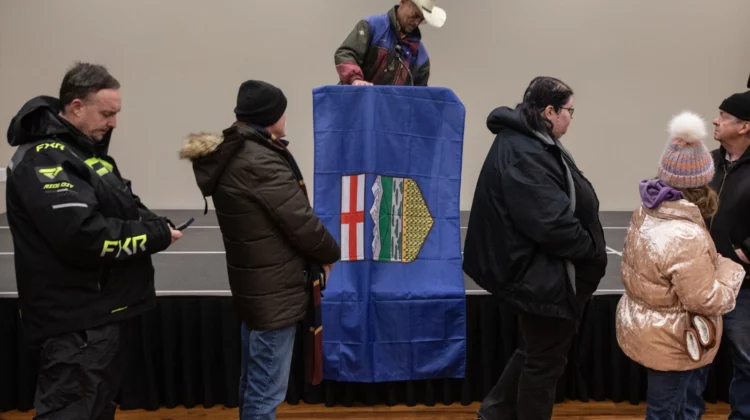
Alberta’s long-running debate over separatism escalated sharply after a provincial court struck down a citizen-led petition seeking to trigger a potential independence referendum. The ruling has intensified tensions between the provincial government, Indigenous leaders, and pro-independence advocates, while also raising broader constitutional questions about treaty rights, democratic processes, and the limits of referendum-based politics in Canada.
At the center of the controversy is a decision by Alberta Justice Shaina Leonard, who ruled that the petition process should not have proceeded without meaningful consultation with First Nations. The judge concluded that Alberta’s potential secession would directly affect Treaty 7 and Treaty 8 rights and therefore triggered a constitutional duty to consult Indigenous peoples before any referendum question could be advanced.
Premier Danielle Smith has strongly rejected the ruling, calling it legally incorrect and anti-democratic, and confirming that the provincial government will appeal.
Court Ruling Halts Separatist Petition Process
Judge Finds Failure to Consult First Nations
In her written decision, Justice Shaina Leonard concluded that the provincial government failed in its legal obligation to consult Indigenous communities before allowing a separatist petition process to move forward.
The petition, led by the group Stay Free Alberta, sought to gather enough signatures to trigger a referendum question on Alberta independence. However, the court found that even the preliminary steps toward such a referendum carried constitutional implications.
Justice Leonard emphasized that Alberta’s secession would not be a neutral political exercise but a process with profound legal and treaty consequences. She specifically noted that treaties involving First Nations in Alberta would be directly impacted by any move toward independence.
Treaty Rights Central to the Decision
The ruling highlighted that Treaties 7 and 8, which cover a significant portion of Alberta and include multiple First Nations, would be affected by any separation from Canada.
According to the judgment, the province had a duty to engage Indigenous communities before advancing any process that could lead to such constitutional change. The court found that no such consultation had taken place, constituting a breach of the duty to consult.
Justice Leonard wrote that Alberta’s secession would clearly have consequences for Indigenous rights and that the Chief Electoral Officer’s acceptance of the petition process could therefore not stand.
Government Reaction: Premier Danielle Smith Rejects Ruling
“Incorrect in Law and Anti-Democratic”
Premier Danielle Smith responded swiftly to the court’s decision, rejecting its reasoning and confirming that the provincial government will appeal.
Speaking in Edmonton during an unrelated announcement, Danielle Smith argued that the ruling undermines democratic expression.
She emphasized that hundreds of thousands of Albertans had engaged with the petition process, regardless of whether they supported or opposed separation. In her view, the court’s decision prevented a legitimate public debate from proceeding.
Smith stated that the ruling was made by a single judge and did not reflect the broader democratic will of the province.
Government Plans Next Steps
The premier confirmed she would be meeting with cabinet members and the United Conservative Party caucus to assess the implications of the ruling and determine a formal response.
She also reiterated her belief that democracy requires allowing public debate on major constitutional questions, including Alberta’s relationship with Canada.
According to Smith, the government remains committed to hearing from Albertans before making further decisions about the referendum process.
Indigenous Nations Challenge the Petition Process
Legal Challenge from First Nations Leadership
The case was brought forward by legal representatives for the Athabasca Chipewyan First Nation and the Blackfoot Confederacy, which includes the Piikani Nation, Siksika Nation, and Blood Tribe.
These groups argued that Alberta’s referendum framework, as applied to separatist efforts, was unconstitutional because it failed to incorporate Indigenous consultation requirements.
Their position centered on the argument that Indigenous rights are not secondary to provincial political processes and must be considered at the earliest stages of any action that could affect treaty relationships.
“Alberta Sits on Treaty Land”
Indigenous leaders involved in the case argued that Alberta’s land base is governed by historic treaties that continue to hold legal and constitutional significance.
They warned that separation from Canada would fundamentally alter those agreements and could not be treated as a simple political decision by a provincial electorate alone.
Their legal argument stressed that any referendum process must account for Indigenous rights before proceeding, not after political momentum has already been built.
Legal Arguments and Court Reasoning
Province’s Position in Court
Lawyers representing the Alberta government argued that the duty to consult would only be triggered if a referendum were successful and concrete steps toward separation were taken.
They maintained that the petition process itself did not constitute an actionable breach of treaty rights and should be allowed to proceed through normal democratic channels.
The province also defended the role of the Chief Electoral Officer in administering the citizen initiative process.
Court Rejects “Delay Consultation” Argument
Justice Leonard rejected the government’s position, concluding that consultation cannot be postponed until after a referendum result is achieved.
The ruling emphasized that the potential impact on treaty rights is enough to trigger consultation obligations at the earliest stages of decision-making.
The judge stated that Alberta’s secession would “as a matter of logic and common sense” affect treaty rights, making early consultation legally necessary.
Impact on Alberta’s Referendum Process
Petition Already Had Significant Support
The separatist group Stay Free Alberta submitted a petition claiming nearly 302,000 signatures, well above the required threshold of approximately 178,000 signatures.
Under normal circumstances, this level of support would have moved the process toward a potential referendum on the provincial ballot.
Premier Danielle Smith had previously indicated that if the petition met requirements, it could be included in a planned referendum scheduled for the fall.
Other Referendum Questions Still Planned
Despite the court ruling, the provincial government still intends to proceed with several referendum questions scheduled for October 19.
These questions relate to broader constitutional and immigration-related issues, but the inclusion of any question on Alberta’s separation is now uncertain.
The ruling has created significant legal ambiguity around whether separatist questions can be included in future ballots.
Political Fallout and Competing Campaigns
Separatist Group Plans Appeal
The lawyer representing Stay Free Alberta, Jeffrey Rath, strongly criticized the ruling, arguing that it contains legal errors and violates principles of natural justice.
The group has confirmed it intends to appeal the decision, signaling a prolonged legal battle ahead.
Pro-Federalist Campaign Advances
At the same time, the pro-federalist “Forever Canadian” petition led by Thomas Lukaszuk, a former Alberta deputy premier, has already been verified by Elections Alberta.
The petition reportedly collected more than 400,000 signatures and asks whether Alberta should remain within Canada.
However, provincial lawmakers have not yet decided whether the question will proceed to a referendum or be voted on in the legislature.
This parallel campaign adds further complexity to Alberta’s political landscape, where competing visions of sovereignty are now moving through official channels simultaneously.
Institutional Response and Uncertainty Ahead
Elections Alberta Reviewing Implications
Elections Alberta stated it is reviewing the court’s decision to determine its implications for ongoing and future citizen initiative petitions.
Officials indicated that additional time is needed to assess how the ruling affects current processes and legal obligations.
Broader Constitutional Questions Raised
The ruling has raised wider questions about how referendum processes interact with Indigenous rights in Canada.
Legal observers note that the decision reinforces the principle that constitutional obligations, particularly the duty to consult Indigenous peoples, apply even to early-stage political processes when potential impacts are foreseeable.
What Happens Next in Alberta’s Separation Debate
The Alberta government’s appeal will determine whether the ruling stands or is overturned, but in the meantime the separatist petition process remains on hold.
If higher courts uphold the decision, any future separatist referendum effort may require structured consultation with First Nations before proceeding.
If overturned, the province could regain the ability to advance petition-based referendum questions without the same pre-consultation requirements.
Either way, the case is likely to become a defining legal precedent for how Indigenous treaty rights intersect with provincial referendum systems in Canada.
Conclusion: A Constitutional Collision Between Democracy and Treaty Rights
The dispute over Alberta’s separatist petition has evolved into more than a political disagreement. It now represents a fundamental legal clash between democratic expression and constitutional obligations toward Indigenous peoples.
Premier Danielle Smith continues to frame the ruling as an infringement on democratic debate, while Indigenous leaders and the court emphasize that treaty rights cannot be sidelined in processes that could reshape the constitutional map of Canada.